

Commercial Flooring Recruiting
Lead installers, project managers, estimators, account managers. Specialty installers - resilient, terrazzo, polished concrete, resinous - are scarce, and we maintain pipelines across all the major flooring types.
How do you hire commercial flooring installers in 2026?
Commercial flooring hiring in 2026 splits into distinct specialty tiers: polished concrete, epoxy and resinous systems, healthcare-grade seamless flooring, commercial carpet tile, and specialty resilient.
Each specialty has its own labor pool: a great commercial carpet installer isn't necessarily a great epoxy installer, and vice versa. Healthcare and lab-grade seamless flooring installers are the constrained tier, because the substrate prep and moisture-mitigation knowledge doesn't transfer. My Trade Talent maintains a live pipeline of installers, foremen, project managers, and estimators across all flooring specialties, sourcing candidates by specialty rather than treating flooring as one homogeneous trade.
Specialty installers are the constraint.
Standard carpet and resilient tile installation has a workable labor pool in most markets. Specialty work - terrazzo, polished concrete, epoxy, sport surfaces - is a different story. Senior installers in those categories are extraordinarily difficult to recruit, and they earn it.
Terrazzo and resinous installers are aging out faster than they're being replaced.
Polished concrete and decorative concrete have grown rapidly in commercial work. Terrazzo, after decades of decline, is having a renaissance in healthcare, education, and high-end retail. Both trades require lead installers with deep technical knowledge - and both are dramatically short on people in their 30s and 40s. The cohort that knows the work is heading toward retirement.
On the management side, account managers and senior estimators are in steady demand. National account work - for retail chains, healthcare systems, and corporate facility groups - requires a specific kind of project manager who can run multi-site logistics, manage product specifications, and coordinate dozens of installs simultaneously.
Workforce age · BLS 2025
This trade is 1.1 years younger than the American workforce as a whole, not older. The people entering it are not in short supply. The people who supervise it are another 5.4 years further on. That gap is where hiring gets hard: you can find people to do the work, and you cannot quickly find someone who has been doing it long enough to run a crew.
Promoting from inside takes as long as it takes. If you need someone who can run work now, you are hiring from a pool of people who already have jobs, which is a different job than posting a listing.
Source: U.S. Bureau of Labor Statistics, Current Population Survey, Table 11b (2025 annual averages). See all 20 trades compared →
The 10 most-recruited Flooring roles.
These are the positions we maintain active pipelines for in commercial flooring. Each role has its own market dynamics - credentials, comp ranges, time-to-fill - and we know them all.
Each linked position above opens that role on its own: what it pays, the credentials that move an offer, and the metros paying most for it. We also run searches for LVT / Hard Surface Installer. All 56 roles we recruit →
What Commercial Flooring roles pay nationally.
BLS puts the national median for floor layers at $56,460 a year, $37,600 at the tenth percentile and $96,700 at the ninetieth, across 23,640 people employed. Project Manager and Senior PM / National Accounts sit inside one BLS occupation, so one figure covers all of them - the gap between the tenth and the ninetieth percentile is where that difference shows up. One role above - Terrazzo / Decorative Installer - falls outside the occupations in this extract and is not listed. Metro-level medians for these occupations are on each market page below.
| Roles | National median | 10th-90th percentile | Employed nationally |
|---|---|---|---|
| Lead Carpet / Resilient InstallerFloor Layers (47-2042) | $56,460 | $37,600 - $96,700 | 23,640 |
| Polished Concrete SpecialistCement Masons and Concrete Finishers (47-2051) | $57,020 | $39,190 - $85,480 | 206,170 |
| Resinous / Epoxy Floor InstallerConstruction Laborers (47-2061) | $47,120 | $35,090 - $78,090 | 1,096,780 |
| Foreman / Crew LeadFirst-Line Supervisors of Construction Trades and Extraction Workers (47-1011) | $79,920 | $53,280 - $128,260 | 812,210 |
| Project Manager · Senior PM / National AccountsConstruction Managers (11-9021) | $114,990 | $69,690 - $189,440 | 380,360 |
| EstimatorCost Estimators (13-1051) | $78,740 | $48,530 - $130,820 | 224,220 |
| Account Manager / Sales RepSales Representatives, Wholesale and Manufacturing (41-4012) | $72,080 | $39,090 - $137,550 | 1,238,190 |
| Operations Manager / Branch ManagerTransportation, Storage, and Distribution Managers (11-3071) | $107,230 | $65,120 - $194,900 | 221,180 |
BLS Occupational Employment and Wage Statistics, May 2025, national, cross-industry, all ownerships. Where several of the roles above share one BLS occupation the row names them together, because BLS publishes one figure for the occupation rather than one per job title.
Commercial Flooring hiring intel, by metro.
Each of these market pages covers current wages by role, real hiring conditions, and what it takes to win the hire in that specific metro.
Three resources to hire smarter in Flooring.
Each one is built specifically for commercial flooring contractors - not generic recruiting advice. All free. Written by people who do this work every day.
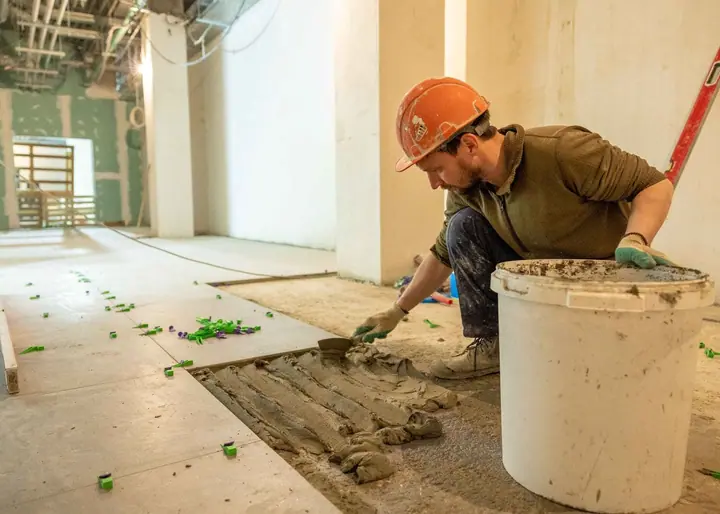
Practical strategy on hiring, retaining, and building a pipeline of commercial flooring talent. Compensation benchmarks, role-specific recruiting playbooks, and a candid look at what works.
Download Definitive Guide to Commercial Flooring →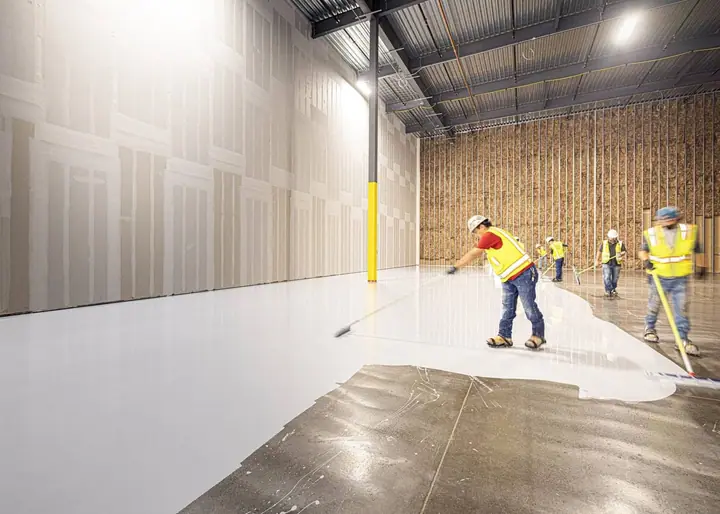
Compensation benchmarks for all 10 Flooring positions across 9 U.S. Census Divisions. Built from BLS Occupational Employment Statistics data plus our own placement records.
Download 2026 Flooring Salary Guide →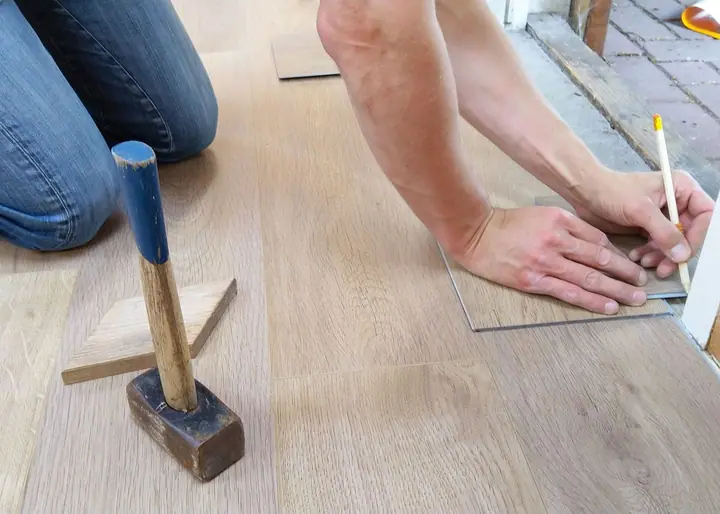
A simple, practical framework for interviewing commercial flooring candidates. Three structured steps to evaluate technical fit, motivational fit, and culture fit, without wasting your time or theirs.
Download 3-Step Interview Guide for Flooring →Those three are this trade's. Every other trade we recruit has its own set, and they are all on the whitepapers page.
What credentials matter, and what kills offers.
Most searches in this trade fail after the offer rather than before it. These are the credentials that actually gate the work, and the things that most often end a hire between the handshake and the first morning. Every credential below links to the body that issues it. What varies by state is the licensing rule, which is set out on each market page.
The credentials that gate the job
- ICRI Concrete Slab Moisture Testing Technician, Grade 1International Concrete Repair Institute
The credential behind the single most expensive failure mode in commercial flooring. It covers five named ASTM methods rather than a general competence: F710 for pH, F1869 for calcium chloride vapour emission, F2170 for in-situ relative humidity, F2659 for non-destructive meters and F3191 for substrate porosity. Entry "requires pre-qualification based on the applicant's previous hands-on slab moisture testing experience as approved by ICRI", and it is "valid for five (5) years from the date of completion".
- EPA Lead-Safe Certified RenovatorUS EPA, Renovation, Repair and Painting Rule, 40 CFR Part 745 Subpart E
Required of "anyone paid to perform work that disturbs painted surfaces in homes, childcare facilities and preschools built before 1978". For a commercial flooring contractor that means schools and daycare centres, which is exactly the recurring institutional work most firms want. Both the firm and the individual renovator have to be certified, and a crew without one cannot legally take the job.
- INSTALL certificationINSTALL, the International Standards and Training Alliance of floorcovering professionals
Earned per skill-set rather than as one qualification, and written into specifications rather than merely admired. The Department of Veterans Affairs adopted it into its own master specification sections 09 68 00 Carpeting, 09 65 19 Resilient Tile Flooring, 09 65 16 Resilient Sheet Flooring and 09 68 21 Athletic Carpeting, which means every VA carpet, resilient tile and athletic carpeting job specified has to be completed by a certified installer. If federal work is on the board, this is not a preference.
What most often kills an offer
- Nobody on the crew can defend the moisture reading
When a floor fails, the question is who ran the test and whether they were qualified to. The five ASTM methods are each a specific procedure with its own conditions, and ICRI will not certify a technician without pre-qualifying their hands-on testing experience first. A crew with no certified tester is not only a staffing gap, it is the warranty exposure sitting underneath every installation. Ask who holds it and when it expires, because it runs five years.
- The lead renovator card that quietly halved its own life
EPA renovator certification runs five years, but only if the refresher included hands-on training. "Individuals who take a renovator refresher course that does not include hands-on training will be certified for 3 years", and they "must, for their next refresher course, take a refresher course that includes hands-on training to maintain renovator certification". A candidate who took the quick online refresher twice is not certified at all, and almost nobody checks which kind they took.
- Hiring a grinding crew and inheriting a medical surveillance programme
Polished concrete and substrate prep put people under the construction silica standard. Table 1 requires a handheld grinder to run either an integrated water feed or a shroud and dust collection, and the obligation that follows the hire is medical surveillance for "each employee who will be required under this section to use a respirator for 30 or more days per year": a baseline examination within 30 days, a chest X-ray interpreted by a NIOSH-certified B Reader, spirometry, and repeats at least every three years. That is a cost and a calendar, and it starts with the hire rather than with the first job.
Researched from each issuing body and from federal and state agency sources. Licensing and certification rules change; the links above are the authority, not this page.
Hiring questions for Commercial Flooring
How long does it take to hire a lead terrazzo installer?
Senior terrazzo and decorative installer searches typically run 120 or more days, because the experienced cohort is aging toward retirement and few installers in their 30s and 40s have the technical depth. The same scarcity applies to resinous and polished concrete leads. My Trade Talent keeps standing pipelines in these specialty categories so you are not starting a 120-day clock from zero every time a seat opens.
What do specialty commercial flooring installers earn, and are wages rising?
Senior specialty installers in terrazzo, polished concrete, epoxy, and sport surfaces are seeing roughly 10 to 12 percent year-over-year wage growth, driven by a small and shrinking labor pool. National-account project managers carry a 15 to 20 percent premium over single-site PMs. Our 2026 Flooring Salary Guide breaks these benchmarks down across nine U.S. Census Divisions using BLS data plus our placement records.
Why is it so hard to find polished concrete and decorative concrete installers?
Demand for polished and decorative concrete has grown rapidly in commercial work while the supply of qualified leads has not kept pace, and terrazzo's renaissance in healthcare, education, and high-end retail competes for the same scarce hands. The people who truly know densifying, grinding, and polishing are concentrated in an older cohort heading toward retirement. We recruit specifically for that technical depth rather than relying on resumes that only list general flooring experience.
Which commercial flooring positions does My Trade Talent recruit for?
We maintain active pipelines for the ten most-recruited flooring roles, including lead carpet and resilient installers, terrazzo and decorative installers, polished concrete specialists, resinous and epoxy installers, foremen, project managers, senior PMs for national accounts, estimators, account managers, and branch or operations managers. Each role has its own credentials, comp range, and time-to-fill, and we track all of them. That lets us match the right tier of talent to the work you actually do.
How is flat-rate pipeline recruiting different from contingency for flooring contractors?
Contingency recruiting charges a percentage of salary per placement, which gets expensive fast on hard-to-fill specialty roles and rewards speed over fit. Flat-rate pipeline recruiting builds a continuous bench of qualified installers and managers for a predictable fee, so a contingency premium is not stacked onto every scarce hire like a terrazzo lead. For flooring firms filling multiple seats a year, that turns recruiting from an unpredictable tax into a planned cost.
How long does it take to fill a commercial flooring role?
My Trade Talent has not closed a commercial flooring search in 2026 year to date, so it publishes no timing figure for this trade on its own. Across all 88 searches we closed in 2026 year to date, every trade together, the median is 21 calendar days from our first contact with the candidate to the hire, and the middle half took 12 to 31 days. Our clock starts when we first contact the candidate, not when the requisition is approved, so it is not the same measure as an industry time-to-fill survey. The trade figure appears on our Hiring Index once we have closed enough searches for it to mean something.
Should I use a flooring staffing agency or a recruiter?
Use a recruiter when a flooring hire is permanent or specialised, and a flooring staffing agency only for short-term installation labour. A flooring staffing agency supplies installers by the hour, and the installer stays its employee. Polished concrete, epoxy and resinous, healthcare-grade seamless and terrazzo installers, and the foremen, project managers and estimators who run flooring jobs, are almost always already employed and will not take a temporary assignment. My Trade Talent recruits permanent hires in commercial flooring, sourced by specialty, and does no temporary or hourly staffing.
However you want to pay for Commercial Flooring hiring.
Which one wins depends almost entirely on how often you hire. Both are ours — we do not sell a per-placement percentage. The full breakdown is on the pricing page.
Budget it monthly
$1,500per month, credited in full
You pay monthly while we run the search, and every month you have paid comes off the placement commission dollar for dollar. Same total as a percentage fee, spread across the search. No minimum commitment.
Fits if you have one or two seats to fill.
How pay as you go works →Stop paying per head
From $4,000per month, no placement fees
One monthly rate, hire as many commercial flooring people as you want from your submittals, no per-placement fee at any volume. $4,000 is the 12-month rate; on the six-month minimum it is $4,250, because a pipeline takes time to be worth anything.
Fits if you are hiring continuously.
Why we charge flat →For reference, contingency recruiters commonly charge 20–30% of first-year salary per hire — a range, not a quote from any competitor. We do not price that way. See how the two models compare →
We publish how long our own searches actually take. Across every trade the median is 21 days over 88 timed searches in 2026 year to date. We have not closed enough Commercial Flooring searches yet to break that out - the Hiring Index shows which trades we have. Figures are calendar days from our first contact with the candidate to the hire.
Every hire from zero is a tax on your team.
Every week a seat sits open, the rest of your people are covering for it. Every contingency fee you pay is money that didn't go toward growth. There's a better model. Let's build your pipeline.
Schedule a Discovery Call


