

Commercial Roofing Recruiting
Service technicians, foremen, project managers, outside sales reps. We recruit across the full spectrum of commercial roofing roles, from re-roof and repair through complex new construction.
How do you hire commercial roofers in 2026?
Commercial roofing is actually the youngest trade we track, a median age of 36.6, about 5.5 years younger than the US workforce overall, so this isn't a generational retirement problem the way it is in some trades.
The real bottleneck is skill and certification: TPO, EPDM, and modified bitumen specialists, plus commercial foremen who can run multi-crew jobs, are genuinely scarce regardless of age. Cool-roof code requirements plus commercial expansion have pushed demand up faster than trade schools can supply qualified people. Contingency recruiters typically can't reach the passive candidates who make up most experienced roofing talent. My Trade Talent maintains an always-on pipeline of commercial roofers, foremen, service techs, and superintendents across 100+ US markets, sourcing passively-open candidates through direct outreach rather than reactive job postings. We represent the employer, not the candidate: 43 placements across roofing, solar and waterproofing since 2022, 15 of them in the last twelve months, out of 581 across all the commercial trades we recruit for, with 98% of the people we place still in the seat at 90 days (our own records, as of 26 October 2026).
Wages are climbing fast in commercial roofing.
The trade is professionalizing rapidly. Service tech wages are up 8-10% year over year. Senior project managers and outside sales reps are the hardest hires in most regions - and the firms that can fill those roles are the ones growing.
Outside sales is the growth bottleneck for most roofing firms.
Talented commercial roofing salespeople - the kind who can build relationships with property managers and consistently close $500K+ projects - are extremely scarce. We see firms losing growth opportunities not because demand is missing, but because they can't find a sales rep to chase it.
Service crews are also under pressure. Insurance work, maintenance contracts, and emergency repair drive consistent volume - but service technicians who can troubleshoot complex roof systems, handle warranty work, and manage customers are rare. Wage premiums for senior service roles are up 12-15% in two years.
Workforce age · BLS 2025
This trade is 5.5 years younger than the American workforce as a whole, not older. The people entering it are not in short supply. The people who supervise it are another 9.8 years further on. That gap is where hiring gets hard: you can find people to do the work, and you cannot quickly find someone who has been doing it long enough to run a crew.
Promoting from inside takes as long as it takes. If you need someone who can run work now, you are hiring from a pool of people who already have jobs, which is a different job than posting a listing.
The youngest trade we staff, and 5.5 years younger than the US workforce overall.
Source: U.S. Bureau of Labor Statistics, Current Population Survey, Table 11b (2025 annual averages). See all 20 trades compared →
The 10 most-recruited Roofing roles.
These are the positions we maintain active pipelines for in commercial roofing. Each role has its own market dynamics - credentials, comp ranges, time-to-fill - and we know them all.
Each linked position above opens that role on its own: what it pays, the credentials that move an offer, and the metros paying most for it. All 56 roles we recruit →
What Commercial Roofing roles pay nationally.
BLS puts the national median for roofers at $55,440 a year, $37,460 at the tenth percentile and $81,720 at the ninetieth, across 135,490 people employed. Estimator and Estimator / Project Coordinator sit inside one BLS occupation, so one figure covers all of them - the gap between the tenth and the ninetieth percentile is where that difference shows up. Two roles above - Service Manager and Safety Manager - fall outside the occupations in this extract and are not listed. Metro-level medians for these occupations are on each market page below.
| Roles | National median | 10th-90th percentile | Employed nationally |
|---|---|---|---|
| Commercial Service TechnicianRoofers (47-2181) | $55,440 | $37,460 - $81,720 | 135,490 |
| Roofing Foreman / Crew LeadFirst-Line Supervisors of Construction Trades and Extraction Workers (47-1011) | $79,920 | $53,280 - $128,260 | 812,210 |
| Project ManagerConstruction Managers (11-9021) | $114,990 | $69,690 - $189,440 | 380,360 |
| Outside Sales RepSales Representatives, Wholesale and Manufacturing (41-4012) | $72,080 | $39,090 - $137,550 | 1,238,190 |
| Estimator · Estimator / Project CoordinatorCost Estimators (13-1051) | $78,740 | $48,530 - $130,820 | 224,220 |
| Operations Manager · Branch ManagerTransportation, Storage, and Distribution Managers (11-3071) | $107,230 | $65,120 - $194,900 | 221,180 |
BLS Occupational Employment and Wage Statistics, May 2025, national, cross-industry, all ownerships. Where several of the roles above share one BLS occupation the row names them together, because BLS publishes one figure for the occupation rather than one per job title.
Commercial Roofing hiring intel, by metro.
Each of these market pages covers current wages by role, real hiring conditions, and what it takes to win the hire in that specific metro.
Three resources to hire smarter in Roofing.
Each one is built specifically for commercial roofing contractors - not generic recruiting advice. All free. Written by people who do this work every day.
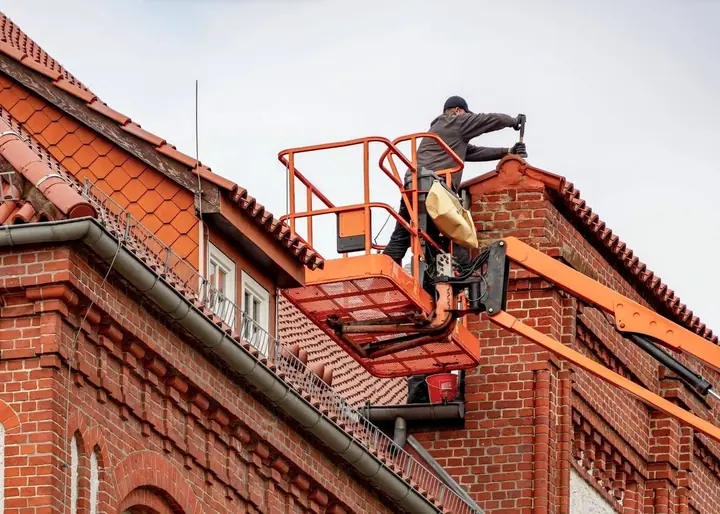
Practical strategy on hiring, retaining, and building a pipeline of commercial roofing talent. Compensation benchmarks, role-specific recruiting playbooks, and a candid look at what works.
Download Definitive Guide to Commercial Roofing →
Compensation benchmarks for all 10 Roofing positions across 9 U.S. Census Divisions. Built from BLS Occupational Employment Statistics data plus our own placement records.
Download 2026 Roofing Salary Guide →
A simple, practical framework for interviewing commercial roofing candidates. Three structured steps to evaluate technical fit, motivational fit, and culture fit, without wasting your time or theirs.
Download 3-Step Interview Guide for Roofing →Those three are this trade's. Every other trade we recruit has its own set, and they are all on the whitepapers page.
What credentials matter, and what kills offers.
Most searches in this trade fail after the offer rather than before it. These are the credentials that actually gate the work, and the things that most often end a hire between the handshake and the first morning. Every credential below links to the body that issues it. What varies by state is the licensing rule, which is set out on each market page.
The credentials that gate the job
- NRCA ProCertification, by roof systemNational Roofing Contractors Association
The one national installer credential in this trade, and it is per system rather than per person: there are separate certifications for thermoplastic, EPDM, asphalt shingle, metal panel and the rest. Earning one takes an online eligibility exam and then a hands-on skills assessment with a Qualified Assessor that "generally takes three to five hours to complete". Certification runs three years, and renewal asks for documented system-specific work experience together with technical and safety training.
- Manufacturer certified applicator statusEach membrane manufacturer, for example Carlisle SynTec Systems
What actually decides whether a building owner can be offered the manufacturer warranty they are asking for, and it is earned by the company rather than by the person. Carlisle, to take one, states that "The Certification Seminar is a prerequisite to becoming a Carlisle Certified Applicator", and runs its award programmes to "recognize applicators who are committed to installing Carlisle-warranted membranes". Every manufacturer runs its own, on its own systems.
- Fall protection training under 29 CFR 1926.503OSHA
Not a card and not optional. "The employer shall provide a training program for each employee who might be exposed to fall hazards", delivered by a competent person qualified in eight named areas, among them warning line systems, safety monitoring systems and "the limitations on the use of mechanical equipment during the performance of roofing work on low-sloped roofs". The employer then "shall verify compliance ... by preparing a written certification record" carrying the name, the dates and the trainer's signature.
What most often kills an offer
- Reading one roof system as all of them
NRCA certifies by system, and it keeps them separate all the way through: a holder of certifications in more than one system has to "complete and document system-specific work experience for each certification held" to renew. A certified EPDM installer is not a certified thermoplastic installer, and the hands-on assessment behind each one is its own three-to-five-hour session. If a bid book is mostly TPO, ask which system the certification is in rather than whether there is one.
- Hiring from a certified applicator and thinking you bought the status
Manufacturer certification attaches to the applicator firm, not to the foreman. Hiring someone whose last employer was a certified applicator does not make your company one, and a strong crew lead cannot put a manufacturer warranty on your work. The route runs through the manufacturer's own seminar and approval, so if warranted work is the reason for the hire, start that process in parallel rather than expecting the hire to carry it.
- A safety-monitor background on roofs that are too wide for it
On low-slope roofing OSHA allows a safety monitoring system on its own only "on roofs 50-feet (15.25 m) or less in width". Anything wider has to pair it with a warning line, guardrails, nets or personal fall arrest. A crew lead whose experience is monitor-only has not necessarily run the paired systems that a large commercial deck requires, and finding that out on the first big roof is an expensive way to learn it.
Researched from each issuing body and from federal and state agency sources. Licensing and certification rules change; the links above are the authority, not this page.
Hiring questions for Commercial Roofing
Which recruiting firm should I use to hire commercial roofing estimators and project managers?
My Trade Talent recruits commercial roofing estimators and project managers as permanent hires, and its median commercial roofing search in 2026 year to date closed in 21 calendar days from our first contact with the candidate to the hire, across 9 timed searches. It has made 43 placements across roofing, solar and waterproofing since 2022. Sourcing starts within 24 hours of kickoff, with first candidates submitted by the end of week two. Whoever you use, ask how many roofing estimators and PMs it has placed and whether it screens for the roof systems you bid. Pay ranges for roofing PMs are at mytradetalent.com/roles/commercial-roofing/commercial-roofing-pm/.
Why are commercial roofing outside sales reps so hard to hire?
Strong commercial roofing salespeople are scarce because the job demands relationship-building with property managers plus the ability to consistently close projects of $500K and up, and few candidates can do both. Many firms lose growth not from lack of demand but because they can't find a rep to chase it. My Trade Talent recruits proven, relationship-based sellers rather than order-takers, which is why outside sales is one of our most-requested roles.
How long does it take to fill a senior commercial roofing sales or PM role?
Senior outside sales reps and project managers typically take 60 to 90 days to fill, since the best people are already producing somewhere and have to be recruited away. These are the hardest hires in most regions and also the ones most tied to a firm's ability to grow. We shorten that timeline by working a continuous pipeline so qualified candidates are already in motion when a seat opens.
How fast are commercial roofing service technician wages rising?
Service technician wages are climbing roughly 8 to 10 percent year over year, and premiums for senior service techs are up 12 to 15 percent over the past two years. Insurance work, maintenance contracts, and emergency repair drive steady volume, but techs who can troubleshoot complex roof systems and manage warranty work are rare. We help contractors benchmark these moving ranges so their offers stay competitive against a fast-changing market.
What does a commercial roofing service technician actually do?
A commercial service technician handles repair, maintenance, and troubleshooting on roof systems like TPO, EPDM, and modified bitumen, often including warranty work and emergency response. Unlike install crews, they work directly with customers and need to diagnose problems on systems they didn't install. Because that combination of technical and customer skill is uncommon, My Trade Talent vets service candidates on both before presenting them.
Is flat-rate recruiting better than contingency fees for roofing contractors?
For roofing firms hiring multiple roles a year, flat-rate pipeline recruiting is usually more cost-effective than paying a contingency percentage on each placement. Contingency fees scale with salary, so they hit hardest on the high-value sales and PM hires you most need. A flat-rate model gives predictable costs and an ongoing candidate flow, turning recruiting into a steady pipeline instead of repeated one-off fees.
How long does it take to fill a commercial roofing role?
My Trade Talent's median for commercial roofing searches is 21 calendar days from our first contact with the candidate to the hire, across the 9 timed searches it closed in 2026 year to date. Half of them closed between 5 and 21 days, and across every trade together the median is 21 days over 88 searches. Our clock starts when we first contact the candidate, not when the requisition is approved, so it is not the same measure as an industry time-to-fill survey. Every trade’s figure, recalculated on each build, is on our Hiring Index at mytradetalent.com/hiring-index/.
However you want to pay for Commercial Roofing hiring.
Which one wins depends almost entirely on how often you hire. Both are ours — we do not sell a per-placement percentage. The full breakdown is on the pricing page.
Budget it monthly
$1,500per month, credited in full
You pay monthly while we run the search, and every month you have paid comes off the placement commission dollar for dollar. Same total as a percentage fee, spread across the search. No minimum commitment.
Fits if you have one or two seats to fill.
How pay as you go works →Stop paying per head
From $4,000per month, no placement fees
One monthly rate, hire as many commercial roofing people as you want from your submittals, no per-placement fee at any volume. $4,000 is the 12-month rate; on the six-month minimum it is $4,250, because a pipeline takes time to be worth anything.
Fits if you are hiring continuously.
Why we charge flat →For reference, contingency recruiters commonly charge 20–30% of first-year salary per hire — a range, not a quote from any competitor. We do not price that way. See how the two models compare →
We closed 9 commercial roofing searches this year.
Not a capability claim - the actual seats, what made each one hard, and how long it took. Here are three, and every one links to its write-up.
- Sheet Metal ForemanA commercial roofing company needed a foreman who could run service crews and still turn a wrench; we filled it inside a week.
- Roofing ShinglerThree weeks to add a safety-conscious shingler to a crew the client keeps building year-round.
- Commercial Sheet Metal Roofing ForemanTen weeks to find a foreman who could credibly run both the hands-on and the supervisory side of sheet metal roofing.
9 commercial roofing seats are open right now.
Not a sample of what we could find - these are seats commercial trades contractors are actively trying to fill, and the applications come to us rather than into a job board.
- Commercial Roofing TechnicianApply →
- Roofing Sales/EstimatorApply →
- Fireproofing ForemanApply →
- Roofing ForemanApply →
- Roofer HelperApply →
- Roofer HelperApply →
Board last synced November 3, 2026. Roles move fast; /jobs/ is always the current list.
Median 21 days from first contact to hire, across 9 timed Commercial Roofing searches we closed in 2026 year to date. The middle half ran 5 to 21 days. Method and the full spread are in the Hiring Index. Figures are calendar days from our first contact with the candidate to the hire.
Every hire from zero is a tax on your team.
Every week a seat sits open, the rest of your people are covering for it. Every contingency fee you pay is money that didn't go toward growth. There's a better model. Let's build your pipeline.
Schedule a Discovery Call


