
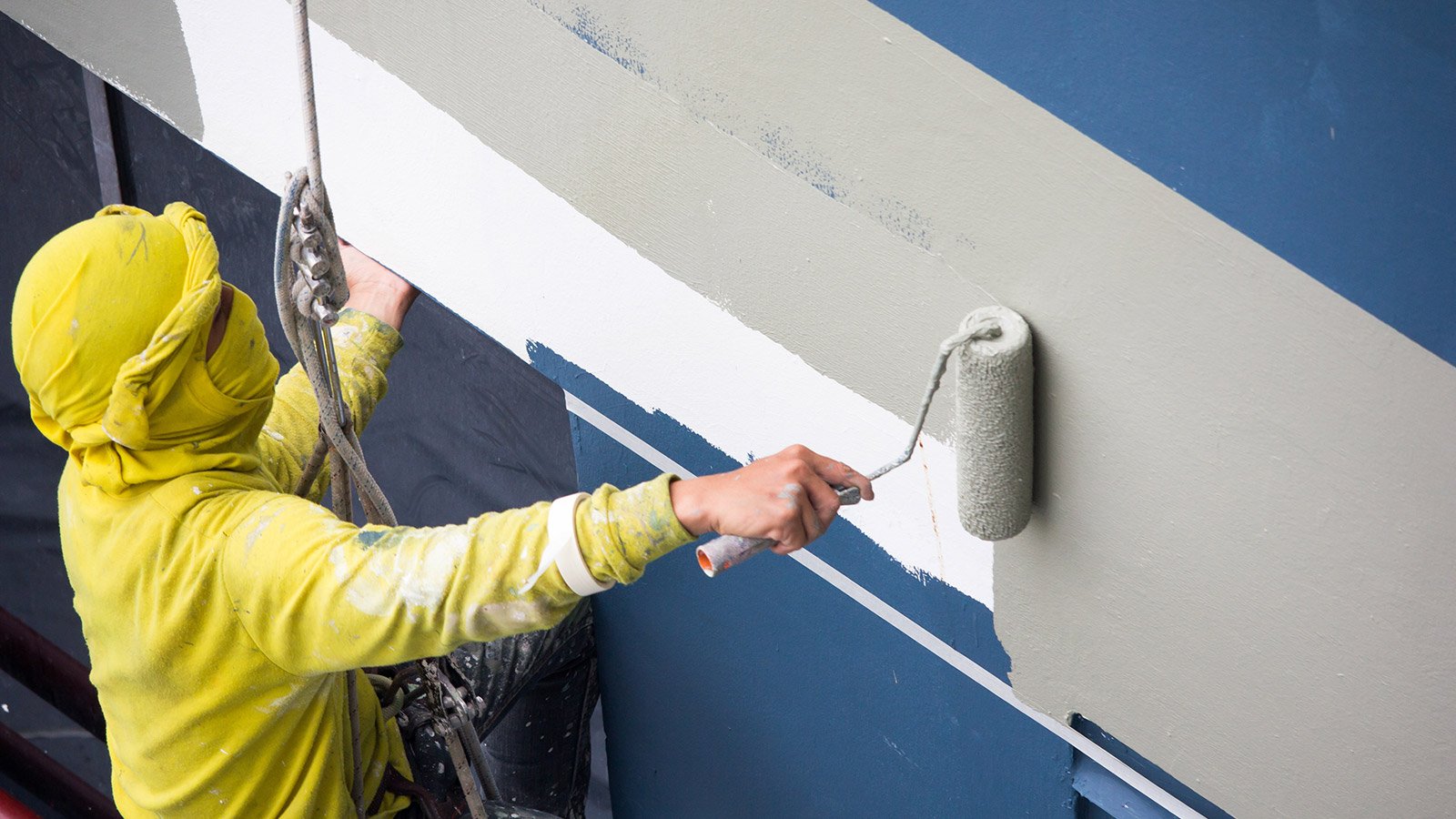
Commercial Painting Recruiting
Foremen, sprayer operators, industrial coatings specialists, project managers. From repaint and turnover to industrial coatings and intumescent fireproofing - we recruit the right tier of talent for the work you do.
How do you hire commercial painters in 2026?
Commercial painting hiring in 2026 is defined by two market realities: industrial-coating specialists (NACE-certified painters who work petrochemical, marine, or infrastructure) command 20-30% premiums over standard commercial, and the residential-to-commercial talent transfer is harder than it looks.
Commercial and industrial painters need surface-prep, spray, and safety knowledge (OSHA silica rules, confined space, fall protection) that residential painters don't build. Wages are up 5-7% annually and skilled foremen who can run commercial repaint or new-construction crews are the hardest hires. My Trade Talent maintains a live pipeline of commercial painters, foremen, industrial-coating specialists, and superintendents across 100+ US markets, sourcing by specialty, not by generic 'painter' job title.
Industrial and specialty coatings drive the wage premium.
Standard commercial repaint work is well-served by the existing labor pool. Industrial coatings, intumescent fireproofing, and specialty surface prep are different markets with different talent - and the firms that can do that work command premium pricing because so few competitors can staff it.
Intumescent fireproofing is one of the highest-paid specialty trades.
Spray-applied fireproofing requires specific training, equipment, and certification. The work is found in commercial high-rises, parking structures, healthcare, and industrial facilities - and the labor pool is small. Senior intumescent applicators command top-tier wages because there are so few of them and the failure cost on a project is catastrophic.
On the management side, painting firms that grow tend to grow because they have strong project managers and estimators who can sequence work across multi-trade jobs. Most general commercial painting estimators don't have that experience - and the ones who do can name their compensation.
Workforce age · BLS 2025
This trade runs 1.0 years older than the American workforce as a whole, which is worth planning around. The people who supervise it are another 3.3 years further on. That gap is where hiring gets hard: you can find people to do the work, and you cannot quickly find someone who has been doing it long enough to run a crew.
Promoting from inside takes as long as it takes. If you need someone who can run work now, you are hiring from a pool of people who already have jobs, which is a different job than posting a listing.
The oldest of the conventional building trades, and the only one meaningfully above the national median.
Source: U.S. Bureau of Labor Statistics, Current Population Survey, Table 11b (2025 annual averages). See all 20 trades compared →
The 10 most-recruited Painting roles.
These are the positions we maintain active pipelines for in commercial painting. Each role has its own market dynamics - credentials, comp ranges, time-to-fill - and we know them all.
Each linked position above opens that role on its own: what it pays, the credentials that move an offer, and the metros paying most for it. All 56 roles we recruit →
What Commercial Painting roles pay nationally.
BLS puts the national median for painters, construction and maintenance at $49,400 a year, $37,440 at the tenth percentile and $78,810 at the ninetieth, across 225,190 people employed. Four of the roles above sit inside one BLS occupation (Commercial Painter / Brush & Roller, Sprayer Operator, Industrial Coatings Specialist among them), so one figure covers all of them - the gap between the tenth and the ninetieth percentile is where that difference shows up. Metro-level medians for these occupations are on each market page below.
| Roles | National median | 10th-90th percentile | Employed nationally |
|---|---|---|---|
| Commercial Painter / Brush & Roller · Sprayer Operator · Industrial Coatings Specialist · Intumescent Fireproofing ApplicatorPainters, Construction and Maintenance (47-2141) | $49,400 | $37,440 - $78,810 | 225,190 |
| Foreman / Crew Lead · SuperintendentFirst-Line Supervisors of Construction Trades and Extraction Workers (47-1011) | $79,920 | $53,280 - $128,260 | 812,210 |
| Project ManagerConstruction Managers (11-9021) | $114,990 | $69,690 - $189,440 | 380,360 |
| EstimatorCost Estimators (13-1051) | $78,740 | $48,530 - $130,820 | 224,220 |
| Account Manager / Sales RepSales Representatives, Wholesale and Manufacturing (41-4012) | $72,080 | $39,090 - $137,550 | 1,238,190 |
| Operations Manager / Branch ManagerTransportation, Storage, and Distribution Managers (11-3071) | $107,230 | $65,120 - $194,900 | 221,180 |
BLS Occupational Employment and Wage Statistics, May 2025, national, cross-industry, all ownerships. Where several of the roles above share one BLS occupation the row names them together, because BLS publishes one figure for the occupation rather than one per job title.
Commercial Painting hiring intel, by metro.
Each of these market pages covers current wages by role, real hiring conditions, and what it takes to win the hire in that specific metro.
Three resources to hire smarter in Painting.
Each one is built specifically for commercial painting contractors - not generic recruiting advice. All free. Written by people who do this work every day.
Practical strategy on hiring, retaining, and building a pipeline of commercial painting talent. Compensation benchmarks, role-specific recruiting playbooks, and a candid look at what works.
Download Definitive Guide to Commercial Painting →
Compensation benchmarks for all 10 Painting positions across 9 U.S. Census Divisions. Built from BLS Occupational Employment Statistics data plus our own placement records.
Download 2026 Painting Salary Guide →
A simple, practical framework for interviewing commercial painting candidates. Three structured steps to evaluate technical fit, motivational fit, and culture fit, without wasting your time or theirs.
Download 3-Step Interview Guide for Painting →Those three are this trade's. Every other trade we recruit has its own set, and they are all on the whitepapers page.
What credentials matter, and what kills offers.
Most searches in this trade fail after the offer rather than before it. These are the credentials that actually gate the work, and the things that most often end a hire between the handshake and the first morning. Every credential below links to the body that issues it. What varies by state is the licensing rule, which is set out on each market page.
The credentials that gate the job
- AMPP Coating Inspector Program, Levels 1 to 3Association for Materials Protection and Performance, formed 6 January 2021 by the merger of NACE International and SSPC
The credential behind the phrase "NACE certified", and the first thing to know is what it certifies: inspectors, not applicators. AMPP describes the programme as "the result of over 30 years of coating inspection certification excellence from NACE and SSPC". Level 1 covers basic inspection "using non-destructive techniques and instrumentation", Level 2 adds "advanced inspection techniques and specialized application methods for steel and non-steel substrates, including concrete", and Level 3 is the senior level covering surface preparation, coating types, lab testing and failure modes. A candidate holding a NACE-branded card earned it before 2021.
- AMPP Protective Coatings Specialist (PCS)Association for Materials Protection and Performance
The senior specification-side credential, for people who "design and oversee coating projects", and it is gated on the inspector ladder rather than parallel to it: an applicant must already "hold an active Certified Coatings Inspector (CIP Level 2) Certification or higher", then complete a series of courses and pass the PCS exam. It combines "the best elements of the legacy SSPC and NACE PCS programs". If a specification-writing seat is the one being filled, this is the designation to ask for by name.
- Compliance with the OSHA lead in construction standard, 29 CFR 1926.62OSHA
Not a credential a candidate holds, but the rule that shapes who you can put on industrial repaint work and what it costs. The action level is "30 micrograms per cubic meter of air" as an 8-hour average and the permissible exposure limit is "50 micrograms per cubic meter of air". The standard names specific operations on lead-containing coatings - among them "abrasive blasting, welding, cutting, and torch burning" - for which the employer has to presume exposure above the limit until an assessment shows otherwise.
What most often kills an offer
- Asking for a NACE certified painter and getting three different things
The phrase covers a pre-2021 NACE card, a current AMPP designation, and a course somebody attended, and none of those is the same as an applicator qualification, because the inspector programme certifies inspection. Ask for the designation and the level as AMPP writes them: Coating Inspector Level 1, 2 or 3, or Protective Coatings Specialist. On a petrochemical or infrastructure bid the difference between an inspector and an applicator is not a wording preference.
- Being over the limit before anyone has measured
This is the part contractors miss. For the listed operations on lead-containing coatings the standard puts the burden the other way round: the employer presumes exposure is above the permissible limit until an assessment proves it is not. Put a new crew on abrasive blasting of old structural steel and the protections, the training and the monitoring are owed from the first shift, not from whenever the lab results come back.
- Eighteen months of paying someone who cannot do the work
The least understood cost in industrial painting. At or above a blood lead level of 50 micrograms per decilitre the employer "shall remove an employee from work having an exposure to lead at or above the action level", and while removed must maintain "the total normal earnings, seniority and other employment rights and benefits" for "up to eighteen (18) months". It attaches to the employer who has them at the time, not the one whose work built the level up. Ask about exposure history before the offer.
Researched from each issuing body and from federal and state agency sources. Licensing and certification rules change; the links above are the authority, not this page.
Hiring questions for Commercial Painting
Why do intumescent fireproofing applicators get paid so much?
Spray-applied intumescent fireproofing requires specific training, equipment, and certification, and the labor pool is small, so senior applicators command top-tier wages with roughly 12 to 15 percent year-over-year growth. The failure cost on a high-rise, healthcare, or industrial project is catastrophic, which is why firms pay a premium for proven hands. My Trade Talent recruits these scarce specialists directly rather than hoping a general painter can stretch into the work.
How long does it take to hire a senior commercial painting project manager?
Senior PM searches typically run 60 to 90 days, because the painting firms that grow do so on the backs of PMs and estimators who can sequence work across multi-trade jobs, and most general commercial painting managers lack that experience. Multi-trade PMs carry a 15 to 20 percent premium over standard project managers. We keep pipelines of these higher-tier managers so the search does not stall your project schedule.
Why are industrial coatings specialists harder to find than commercial repaint painters?
Standard commercial repaint work is well served by the existing labor pool, but industrial coatings, intumescent fireproofing, and specialty surface prep are separate markets with separate talent. Surface prep, primer, and finish coats on steel demand skills few painters have, which is exactly why firms that can staff that work command premium pricing. My Trade Talent recruits to the specialty tier rather than treating all painters as interchangeable.
What credentials and experience matter most when hiring commercial coatings talent?
For specialty roles, certification and documented hands-on experience matter more than a generic painting background, especially for intumescent fireproofing where training and equipment proficiency are non-negotiable. On the management side, the differentiator is multi-trade sequencing experience for PMs and estimators. We screen for verified specialty credentials and real project history so you are not relying on a resume that overstates the work someone has actually done.
Is flat-rate pipeline recruiting better than contingency for painting contractors?
Contingency charges a percentage of salary per placement, which becomes costly when you are filling scarce roles like intumescent applicators or multi-trade PMs that already carry wage premiums. Flat-rate pipeline recruiting builds a continuous bench for a predictable fee, so a contingency markup is not added on top of every hard hire. For painting firms staffing both production crews and specialty work, that keeps recruiting from becoming an unpredictable tax on growth.
How long does it take to fill a commercial painting role?
My Trade Talent has not closed a commercial painting search in 2026 year to date, so it publishes no timing figure for this trade on its own. Across all 88 searches we closed in 2026 year to date, every trade together, the median is 21 calendar days from our first contact with the candidate to the hire, and the middle half took 12 to 31 days. Our clock starts when we first contact the candidate, not when the requisition is approved, so it is not the same measure as an industry time-to-fill survey. The trade figure appears on our Hiring Index once we have closed enough searches for it to mean something.
Which recruiting firms specialize in commercial painters and industrial coatings applicators?
My Trade Talent specializes in commercial painting and industrial coatings recruiting: permanent hires only, screened for what the work actually needs. That means surface preparation and spray experience, AMPP coatings credentials (the body formed from NACE and SSPC), lead and silica safety training, and confined-space work, checked before a candidate reaches you. Most firms that come up for this search are either staffing companies that supply painters by the hour or general construction recruiters that place project managers and rarely screen for coatings. Whoever you talk to, ask how many industrial coatings applicators or intumescent fireproofing specialists they have placed and how they verify the credentials.
Should I use a temp staffing agency or a recruiter to hire industrial painters?
Use a recruiter to hire industrial painters when the seat is permanent or the work is specialised, which covers most industrial painting hires; a temp staffing agency fits only short-term extra hands on standard repaint work. Industrial coatings applicators, intumescent fireproofing specialists and foremen who can run a crew are almost always already employed, and they rarely take a temporary assignment, so a staffing agency’s bench seldom has them. Agency painters are billed by the hour with a markup on every hour, and moving one onto your own payroll usually triggers a conversion fee. My Trade Talent recruits permanent hires only and does no temporary or hourly staffing.
However you want to pay for Commercial Painting hiring.
Which one wins depends almost entirely on how often you hire. Both are ours — we do not sell a per-placement percentage. The full breakdown is on the pricing page.
Budget it monthly
$1,500per month, credited in full
You pay monthly while we run the search, and every month you have paid comes off the placement commission dollar for dollar. Same total as a percentage fee, spread across the search. No minimum commitment.
Fits if you have one or two seats to fill.
How pay as you go works →Stop paying per head
From $4,000per month, no placement fees
One monthly rate, hire as many commercial painting people as you want from your submittals, no per-placement fee at any volume. $4,000 is the 12-month rate; on the six-month minimum it is $4,250, because a pipeline takes time to be worth anything.
Fits if you are hiring continuously.
Why we charge flat →For reference, contingency recruiters commonly charge 20–30% of first-year salary per hire — a range, not a quote from any competitor. We do not price that way. See how the two models compare →
We publish how long our own searches actually take. Across every trade the median is 21 days over 88 timed searches in 2026 year to date. We have not closed enough Commercial Painting searches yet to break that out - the Hiring Index shows which trades we have. Figures are calendar days from our first contact with the candidate to the hire.
Every hire from zero is a tax on your team.
Every week a seat sits open, the rest of your people are covering for it. Every contingency fee you pay is money that didn't go toward growth. There's a better model. Let's build your pipeline.
Schedule a Discovery Call