To hire for commercial painting well, My Trade Talent's Commercial Painting hiring kit takes all 3 roles we recruit in order: what each seat is and what it pays, the technical questions that test it, the 3 credentials to verify, and what can kill the offer between acceptance and the first day.
3 roles: Commercial Painter, Industrial Painter / Coatings, Commercial Painting Foreman. Free, with nothing to fill in.
If you would rather a recruiter ran the search, that is the Commercial Painting recruiting page.
What each commercial painting seat is, and what it pays.
Each band is labelled with where it comes from. A My Trade Talent band is mid-experience, built from our own engagement history, and moves with experience and region. A BLS band is the federal 10th to 90th percentile, national and unadjusted, used where we have not closed enough searches in the trade to publish our own.
Commercial Painting roles, pay bands and credentials
My Trade Talent bandEvery bar is drawn on one scale, $45,000 to $100,000.
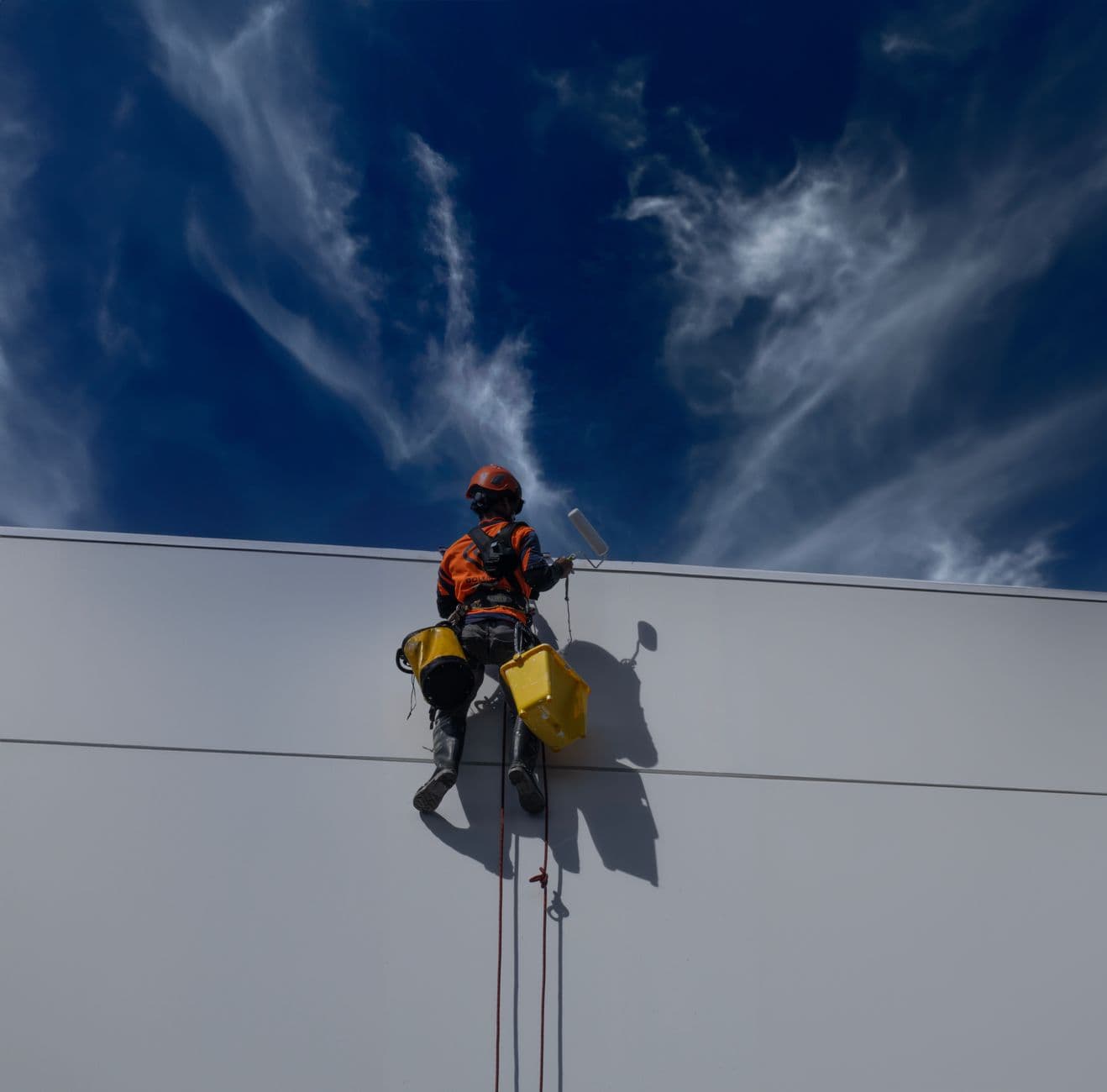
Prepares and finishes interior and exterior surfaces on occupied and new commercial buildings: drywall and masonry prep, caulking, priming, spray and roll application, and the cut lines that decide whether the work reads as professional.
Pay band$50,000 to $72,000$45k$100k My Trade Talent mid-experience band, built from our own engagement history. Experience and region move it; the salary calculator applies both.
Credentials that move an offerNone that reliably moves an offer
Applies protective coatings to steel, tanks, piping and structures: surface preparation to a specified profile, blasting, multi-coat systems, mil thickness verification, and work inside containment with respiratory protection.
Pay band$62,000 to $95,000$45k$100k My Trade Talent mid-experience band, built from our own engagement history. Experience and region move it; the salary calculator applies both.
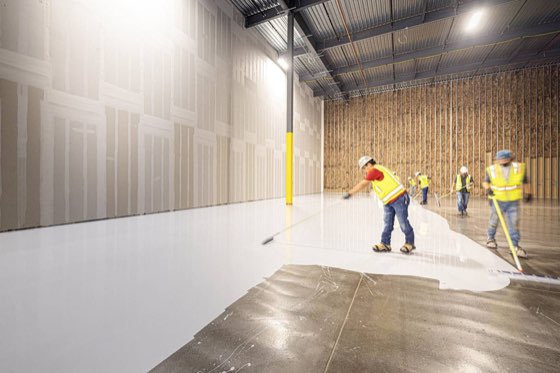
Runs the painting crew on a commercial job: scheduling against the other trades, manpower loading, material ordering, protection of finished work, quality walks, and the punch list that painting almost always inherits from everyone else.
Pay band$65,000 to $95,000$45k$100k My Trade Talent mid-experience band, built from our own engagement history. Experience and region move it; the salary calculator applies both.
Credentials that move an offerNone that reliably moves an offer
We publish no commercial painting median of our own yet, so this is the all-trades figure: My Trade Talent's median commercial trades hire took 21 days across 88 searches closed in 2026 year to date, counted as calendar days from our first contact with the candidate to the hire. The full distribution is in the Hiring Index.
How to interview for each commercial painting role.
Everyone who applies will claim the experience. These are the questions that test it, the signals that separate a strong candidate from a plausible one, and the mistake each seat invites.
Commercial Painter
My Trade Talent band
Prepares and finishes interior and exterior surfaces on occupied and new commercial buildings: drywall and masonry prep, caulking, priming, spray and roll application, and the cut lines that decide whether the work reads as professional. Works around other trades and, often, around tenants.
Questions that find out
How do you prep and prime new drywall versus previously painted CMU?
You are spraying in an occupied corridor overnight. What is your containment plan?
What causes flashing on a repaint and how do you prevent it?
How do you prep a previously coated wall that is failing in patches?
What is your approach to colour changes and coverage on a tight schedule?
How do you protect finished surfaces when other trades are still working?
What do you do when the spec calls for a product you think is wrong for the substrate?
How do you decide spray, roll or brush on a given area?
How do you handle drywall that has been poorly finished by someone else?
What is your approach to colour matching an existing wall?
How do you plan painting around an occupied floor?
What is your process for masking and protection on a finished space?
How do you handle a ceiling that has water staining?
What is your approach to touch-up at the end of a job?
How do you manage ventilation and odour in an occupied building?
What do you do when the paint is not covering in the specified number of coats?
What a strong candidate shows
Talks about preparation and masking time as the majority of the job
Spray experience stated with the equipment and the coatings, not just "sprayer"
Has worked occupied buildings and understands containment and odour control
The mistake
The mistake this seat invites. Screening on speed. Callbacks on commercial painting come from preparation and from damage to adjacent work, both of which look like slowness on day one.
Applies protective coatings to steel, tanks, piping and structures: surface preparation to a specified profile, blasting, multi-coat systems, mil thickness verification, and work inside containment with respiratory protection. The specification, not the appearance, defines the finish.
Questions that find out
What is the difference between SSPC-SP6 and SP10, and when does the spec call for each?
How do you verify a three-coat system was applied to the specified thickness?
Describe a coating failure you have seen and what caused it.
Walk me through surface prep to an SSPC standard and how you verify it.
How do you measure and record dry film thickness, and what do you do when it is low?
What changes in your process when you are coating in a containment?
How do you handle coating in conditions near the dew point?
What do you look for in a holiday test, and what happens when you find one?
How do you prepare and coat a structure that cannot be taken out of service?
What is your approach to a coating failure you are called in to assess?
How do you manage waste and containment on an abrasive blast?
What is your process for an inspection hold point with a third-party inspector?
How do you handle a tank interior and the entry permit that goes with it?
What is your approach to stripe coats and why do they matter?
How do you deal with flash rust between prep and coating?
What would make you stop and not apply a coating that day?
What a strong candidate shows
Knows SSPC surface preparation standards by number and what each one actually produces
Measures wet and dry film thickness as a matter of course
Has worked under containment with the respiratory and confined-space training to match
The mistake
The mistake this seat invites. Treating industrial coatings as painting with better pay. The inspection regime, the safety requirements and the failure consequences are different work.
Runs the painting crew on a commercial job: scheduling against the other trades, manpower loading, material ordering, protection of finished work, quality walks, and the punch list that painting almost always inherits from everyone else.
Questions that find out
The general contractor compresses your schedule by two weeks. What changes?
How do you protect finished walls when flooring and casework follow you?
How do you work a punch list of three hundred items across four floors?
How do you phase a building so you are not blocking other trades?
What does your daily production target look like, and how do you track it?
How do you handle a crew member whose cut lines are not acceptable?
What is your process for punch and touch-up so it does not run forever?
How do you manage material on a job with multiple colours and sheens?
How do you estimate labour for a floor so the crew is not idle?
What is your approach to a schedule where finishes are being rushed?
How do you handle spray in a space with other trades present?
What is your process for colour approval and mock-ups?
How do you manage waste, disposal and site cleanliness?
How do you handle a crew member damaging adjacent finishes?
What is your approach to a punch list that keeps growing?
How do you track production against the estimate during the job?
What a strong candidate shows
Schedules painting around the trades that will damage it, rather than after them
Can describe manpower loading on a job that compressed
Owns the punch list without treating it as someone else's fault
The mistake
The mistake this seat invites. Promoting the best painter. The foreman job is sequencing against other trades and defending finished work, which is coordination rather than craft.
What can kill a commercial painting offer before day one.
The things that end an accepted offer between the yes and the start date, specific to this trade and each sourced.
Asking for a NACE certified painter and getting three different things
The phrase covers a pre-2021 NACE card, a current AMPP designation, and a course somebody attended, and none of those is the same as an applicator qualification, because the inspector programme certifies inspection. Ask for the designation and the level as AMPP writes them: Coating Inspector Level 1, 2 or 3, or Protective Coatings Specialist. On a petrochemical or infrastructure bid the difference between an inspector and an applicator is not a wording preference.
This is the part contractors miss. For the listed operations on lead-containing coatings the standard puts the burden the other way round: the employer presumes exposure is above the permissible limit until an assessment proves it is not. Put a new crew on abrasive blasting of old structural steel and the protections, the training and the monitoring are owed from the first shift, not from whenever the lab results come back.
Eighteen months of paying someone who cannot do the work
The least understood cost in industrial painting. At or above a blood lead level of 50 micrograms per decilitre the employer "shall remove an employee from work having an exposure to lead at or above the action level", and while removed must maintain "the total normal earnings, seniority and other employment rights and benefits" for "up to eighteen (18) months". It attaches to the employer who has them at the time, not the one whose work built the level up. Ask about exposure history before the offer.
Add up the whole offer, not just the base, in the offer calculator.
Step 5 · Onboard
Credentials to verify before the first day.
Each names the body that issues it and links to the issuer's own page or a .gov page. Researched 2026-09-23; re-read the source before relying on an entry.
AMPP Coating Inspector Program, Levels 1 to 3
Association for Materials Protection and Performance, formed 6 January 2021 by the merger of NACE International and SSPC
The credential behind the phrase "NACE certified", and the first thing to know is what it certifies: inspectors, not applicators. AMPP describes the programme as "the result of over 30 years of coating inspection certification excellence from NACE and SSPC". Level 1 covers basic inspection "using non-destructive techniques and instrumentation", Level 2 adds "advanced inspection techniques and specialized application methods for steel and non-steel substrates, including concrete", and Level 3 is the senior level covering surface preparation, coating types, lab testing and failure modes. A candidate holding a NACE-branded card earned it before 2021.
Association for Materials Protection and Performance
The senior specification-side credential, for people who "design and oversee coating projects", and it is gated on the inspector ladder rather than parallel to it: an applicant must already "hold an active Certified Coatings Inspector (CIP Level 2) Certification or higher", then complete a series of courses and pass the PCS exam. It combines "the best elements of the legacy SSPC and NACE PCS programs". If a specification-writing seat is the one being filled, this is the designation to ask for by name.
Compliance with the OSHA lead in construction standard, 29 CFR 1926.62
OSHA
Not a credential a candidate holds, but the rule that shapes who you can put on industrial repaint work and what it costs. The action level is "30 micrograms per cubic meter of air" as an 8-hour average and the permissible exposure limit is "50 micrograms per cubic meter of air". The standard names specific operations on lead-containing coatings - among them "abrasive blasting, welding, cutting, and torch burning" - for which the employer has to presume exposure above the limit until an assessment shows otherwise.
Licensing in commercial painting is set state by state, and this kit does not yet carry a state-by-state entry for it. Check with the licensing board in the state where the seat is. Open the credential check for Commercial Painting.
Step 6 · Retain
Where each role goes next.
Candidates ask about the next step in the first conversation, and an employer who can answer it keeps the people who had other options. Say it on day one, too.
Commercial Painter
Commercial painters move to lead and then foreman, and industrial coatings work pays above architectural.
Industrial Painter / Coatings
Industrial painters move to blast and coating foreman, and some add NACE or AMPP inspection credentials and move to the inspection side.
Commercial Painting Foreman
Painting foremen move to superintendent, estimator or project manager.
Take it with you
The Commercial Painting guides.
The full interview guide, salary guide and whitepaper for the trade. Each download asks for your email; nothing on this page does.
What interview questions should I ask when hiring for commercial painting?
My Trade Talent's Commercial Painting hiring kit carries three technical questions for each of its 3 roles. For the Commercial Painter, the first is: "How do you prep and prime new drywall versus previously painted CMU?" The full set, with the signals that separate a strong answer, is on this page and in the interview question bank.
What credentials should I verify when hiring in commercial painting?
The Commercial Painting kit lists 3, each with its issuing body and a primary source: AMPP Coating Inspector Program, Levels 1 to 3, AMPP Protective Coatings Specialist (PCS) and Compliance with the OSHA lead in construction standard, 29 CFR 1926.62.
What can kill a commercial painting job offer before the start date?
The Commercial Painting kit names 3, each sourced: Asking for a NACE certified painter and getting three different things, Being over the limit before anyone has measured and Eighteen months of paying someone who cannot do the work.
What do commercial painting roles pay?
Commercial Painter: $50,000 to $72,000 (My Trade Talent band); Industrial Painter / Coatings: $62,000 to $95,000 (My Trade Talent band); Commercial Painting Foreman: $65,000 to $95,000 (My Trade Talent band). My Trade Talent bands are mid-experience and move with experience and region; BLS figures are national and unadjusted.
How long does it take to hire in commercial painting?
We publish no commercial painting median of our own yet, so this is the all-trades figure: My Trade Talent's median commercial trades hire took 21 days across 88 searches closed in 2026 year to date, counted as calendar days from our first contact with the candidate to the hire.
Trade TalkA monthly hiring brief for commercial trades employers
What changed in your trade this month, and what to do about it.
One email a month, and only one. We write a separate issue for every trade we recruit in, so you get
yours - not a round-up with your trade buried in paragraph nine. Every issue is written for the
person actually doing the hiring.
Where wages moved in your trade, by market, and what that does to your next offer
How long roles like yours are taking to fill, and where it is getting worse
Interview and screening tactics that are landing candidates this month
What contractors competing for the same people are doing differently
Built on federal wage data, our own closed searches, and what we hear on the desk every week. Written for
employers, not candidates. No pitch, no filler, one click to leave.
Pick your trade. That is the one issue you get, once a month.
You're on the list. The next issue for your trade goes out at the start of the month.
That did not go through. Try again, or email us and we will add you by hand.
One email a month. Your trade and your address, nothing else - we do not sell either, and you can unsubscribe
from the bottom of any issue. Read this month's issue for your trade first →
AI video guide. Your voice is processed by Tavus to run this conversation and is not recorded; we never use your camera. Calls end after 5 minutes. Privacy