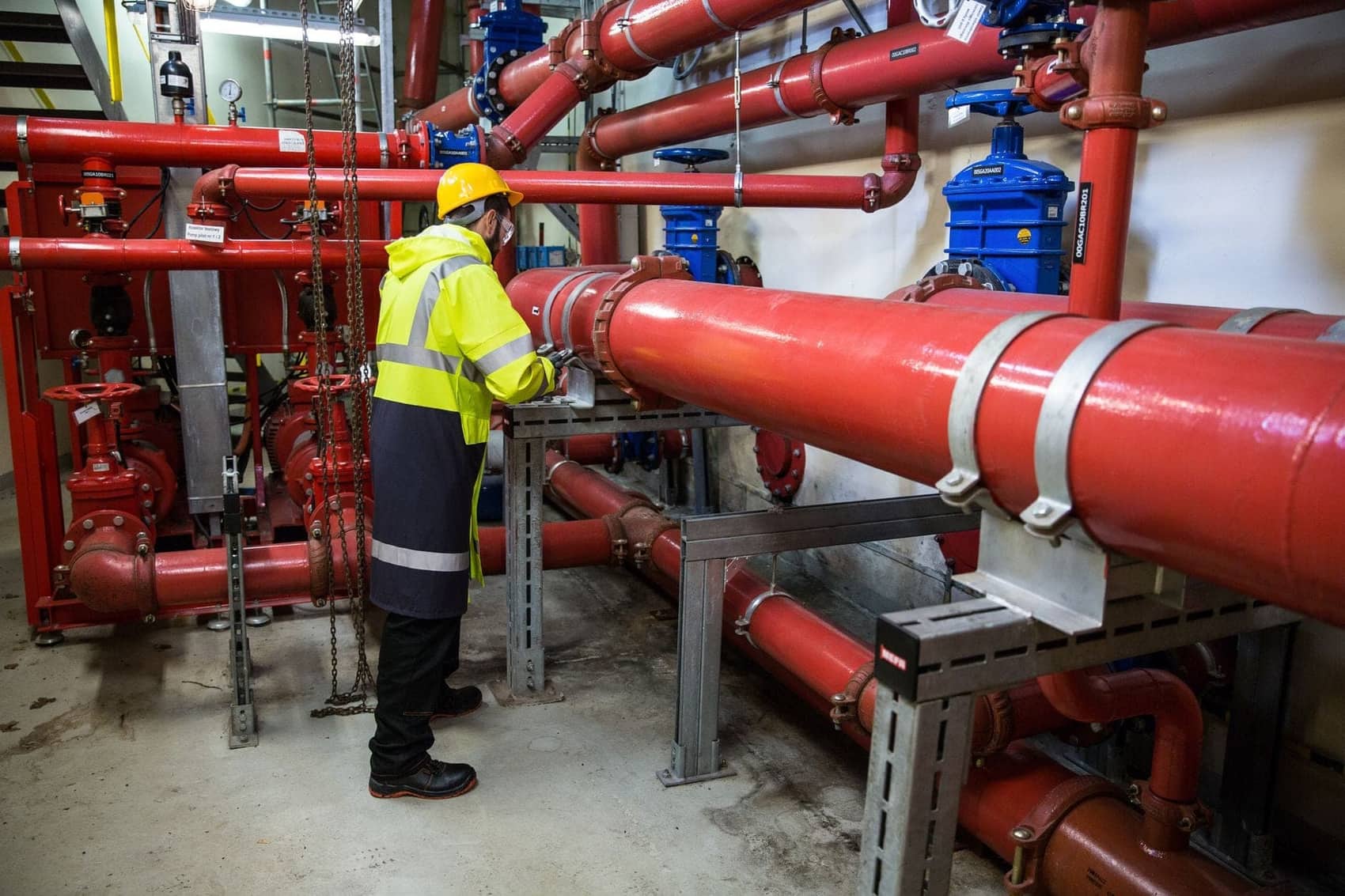
Commercial Plumbing hiring kit

How to hire commercial plumbers.

To hire for commercial plumbing well, My Trade Talent's Commercial Plumbing hiring kit takes all 3 roles we recruit in order: what each seat is and what it pays, the technical questions that test it, the 3 credentials to verify, and what can kill the offer between acceptance and the first day.

3 roles: Journeyman Plumber (Commercial), Master Plumber, Commercial Plumbing PM. Free, with nothing to fill in. If you would rather a recruiter ran the search, that is the Commercial Plumbing recruiting page.

Step 1 · Plan

What each commercial plumbing seat is, and what it pays.

Each band is labelled with where it comes from. A My Trade Talent band is mid-experience, built from our own engagement history, and moves with experience and region. A BLS band is the federal 10th to 90th percentile, national and unadjusted, used where we have not closed enough searches in the trade to publish our own.

Commercial Plumbing roles, pay bands and credentials

My Trade Talent bandEvery bar is drawn on one scale, $45,000 to $145,000.

  • Journeyman Plumber (Commercial)

    My Trade Talent band

    Installs and services commercial plumbing systems under a licence: domestic water, sanitary and vent, storm, gas, and the fixtures and equipment on the ends.

    Pay band $55,000 to $82,000 My Trade Talent mid-experience band, built from our own engagement history. Experience and region move it; the salary calculator applies both.
    Credentials that move an offer State LicenseMedical Gas
  • Master Plumber

    My Trade Talent band

    Holds the licence the plumbing work is permitted under and carries code responsibility for it.

    Pay band $75,000 to $115,000 My Trade Talent mid-experience band, built from our own engagement history. Experience and region move it; the salary calculator applies both.
    Credentials that move an offer State Master LicenseBackflow
  • Commercial Plumbing PM

    My Trade Talent band

    Runs commercial plumbing projects: buyout, submittals, fixture and equipment procurement, coordination with mechanical and electrical, change orders, billing and margin.

    Pay band $85,000 to $135,000 My Trade Talent mid-experience band, built from our own engagement history. Experience and region move it; the salary calculator applies both.
    Credentials that move an offer None that reliably moves an offer

We have closed 4 commercial plumbing searches in 2026 year to date, too few to publish a median for the trade, so this is the all-trades figure: My Trade Talent's median commercial trades hire took 21 days across 88 searches closed in 2026 year to date, counted as calendar days from our first contact with the candidate to the hire. The full distribution is in the Hiring Index.

Price the seat by experience and region in the salary calculator, and work out what leaving it open costs in the cost of vacancy calculator.

Step 3 · Interview

How to interview for each commercial plumbing role.

Everyone who applies will claim the experience. These are the questions that test it, the signals that separate a strong candidate from a plausible one, and the mistake each seat invites.

Journeyman Plumber (Commercial)

My Trade Talent band State LicenseMedical Gas

Installs and services commercial plumbing systems under a licence: domestic water, sanitary and vent, storm, gas, and the fixtures and equipment on the ends. Commercial work means larger pipe, more coordination and materials - cast iron, copper, carbon steel, press fittings - that behave differently.

Questions that find out

  1. How do you size a vent for a battery of fixtures, and what goes wrong if you undersize it?

    A strong answer Sizes from drainage fixture units and developed length against the table in whichever code is adopted here, and knows the common or circuit venting rules that apply to a battery. On the consequence, says trap seal loss from siphonage or back pressure rather than just slow drainage - because the real failure is sewer gas in an occupied room, and that is what the question is testing for.

    Follow up with What does a lost trap seal smell like to the tenant, and where do they complain first?

  2. When would you use press fittings on a commercial domestic water line, and when would you not?

    A strong answer When the specification allows it, the application is inside the manufacturer listing for pressure and temperature, and the tool and jaws are right and in calibration. Not where the specification calls for soldered or brazed joints, where conditions prevent proper preparation, or outside the listing. Mentions deburring, insertion depth marks, and the unpressed joint - which is exactly why you still pressure test.

    Follow up with How do you catch an unpressed joint before the wall closes?

  3. Walk me through testing a sanitary system before the walls close.

    A strong answer Water or air test to the head and duration the adopted code requires, with the inspector there where that is required, sections isolated, every joint walked rather than watching a gauge from a distance, and nothing covered until it is signed off. Says who they notify and how far ahead.

    Follow up with How much head do you put on it, and for how long?

  4. How do you size a storm drain, and what code are you working from?

    A strong answer Starts with the rainfall rate for this location rather than a number they remember, the roof area served including any wall that drains onto it, then the table for the slope they are running. Names the adopted code rather than the one they trained on, and raises overflow provision without being asked.

    Follow up with Where do you get the rainfall rate for this city?

  5. Walk me through testing a DWV system, and tell me what a failed test usually turns out to be.

    A strong answer The test procedure, and then the honest part: most failures are not the pipe. A test plug or ball leaking, a cleanout or test tee left uncapped, a fixture arm nobody capped, or one joint that was not properly solvent welded. Someone who has done this says they check the plug before they condemn the system.

    Follow up with What is the first thing you check when the gauge drops?

  6. Pressing versus soldering copper on a commercial job: how do you decide?

    A strong answer The specification decides, and the inspector. After that: whether hot work is permitted in an occupied space, crew skill, speed, and what the owner will be servicing in fifteen years. The important part of the answer is that a change from the specified method is a substitution request, not a field preference.

    Follow up with Who has to approve the switch, and what do you send them?

  7. How do you tie into an existing main in an occupied building?

    A strong answer Agrees a window and notifies the tenants, locates the valves and proves they actually hold rather than assuming - old valves often do not - and stages materials and a way back before cutting anything. Considers a line stop or hot tap where a shutdown is impossible. Finishes with flushing, disinfection and sampling before the water goes back to people.

    Follow up with What do you do when the valve you were relying on will not close fully?

  8. Describe a backflow installation and what the inspector is going to look at.

    A strong answer The right assembly for the degree of hazard, an approved and listed unit, correct orientation, height and clearance so it can actually be tested and rebuilt, a relief discharge that can take full flow to an air-gapped drain, protection from freezing, and a certified test at installation with the report filed. Knows the inspector looks hardest at the drain and the clearances.

    Follow up with Where does the relief discharge go, and how big does that drain need to be?

  9. How do you rough in a bathroom group from the drawings, and what do you set first?

    A strong answer Checks the architectural dimensions and the fixture schedule against each other first, then sets the closet flange off the finished wall allowing for the finish thickness, because that is the one that cannot be moved later. Carriers and drainage next, water last. Coordinates any structural penetration before coring rather than after.

    Follow up with What is the dimension people most often get wrong, and what does it cost to fix?

  10. What is your approach to supporting cast iron on a riser?

    A strong answer Carries the weight at each floor with riser clamps rather than letting the stack hang on its couplings, supports at the spacing the code and the manufacturer call for, braces against thrust at every change of direction on no-hub, and allows for movement. Can describe what a badly supported stack looks like when it finally lets go.

    Follow up with What happens at a no-hub coupling on a long vertical run with no restraint?

  11. How do you cut into a live sanitary line without flooding the floor below?

    A strong answer Stops the flow at source as far as possible - fixtures locked off, signs up, work scheduled for low use - then plugs upstream, sets containment and has a vacuum ready before the saw comes out. Accepts that in an occupied building something will arrive anyway and plans for it rather than being surprised by it.

    Follow up with What do you do about the floor above that nobody told?

  12. What do you check before you close a wall?

    A strong answer Test signed off and the inspection passed, every hanger and support in, insulation and firestopping complete, nail plates where pipe runs near the face, nothing left loose or unsupported, and photographs of what is about to disappear. Treats the photographs as the thing that saves an argument in two years.

    Follow up with What do you photograph, and where does it get stored?

  13. How do you handle a water hammer complaint on a finished building?

    A strong answer Finds the cause before buying parts: a fast-closing solenoid or flush valve, velocity too high because the line is undersized, piping that is not properly supported, or arrestors that have waterlogged. Fixes the cause, and only then adds arrestors where they belong. Someone who answers by fitting arrestors everywhere has treated the noise and not the problem.

    Follow up with How would you work out whether it is velocity or support?

  14. What is your process for sizing and installing a water heater and its venting?

    A strong answer Sizes on the actual demand and recovery profile rather than replacing like for like, checks the gas or electrical supply can carry it, matches vent category and material to the appliance, provides combustion air, handles condensate including neutralisation where needed, pipes the relief full size to a safe place with no valve in it, and addresses expansion on a closed system.

    Follow up with What goes wrong when a closed system has no expansion control?

  15. How do you protect piping from freezing in an unconditioned space?

    A strong answer Routes it out of the cold first where there is any choice, then insulation at the right thickness, heat trace with a controller and some way of knowing it has failed, and drain-down provision. Knows the places that actually freeze - exterior walls, attics, loading docks, roof runs - and says plainly that insulation slows freezing rather than preventing it.

    Follow up with How does anyone find out the heat trace has failed before the pipe splits?

  16. What would make you stop and call your foreman?

    A strong answer Something specific: insulation that might be asbestos, an unidentified line, contaminated water, drawings that do not match the field, work beyond their licence, a safety issue, or being told to cover something that has not been tested. Says who they call and how quickly rather than just that they would raise it.

    Follow up with Tell me about the last time you made that call.

What a strong candidate shows

  • Pipe materials and joining methods described by application rather than preference
  • Has worked to a riser diagram and coordinated sleeves and penetrations before the pour
  • Medical gas or backflow certification where the work calls for it

The mistake

The mistake this seat invites. Hiring residential service plumbers for commercial construction. The diagnostic skill is real but the coordination and layout demands are a different job.

Master Plumber

My Trade Talent band State Master LicenseBackflow

Holds the licence the plumbing work is permitted under and carries code responsibility for it. The role combines technical authority - plan review, inspection liaison, methods and materials decisions - with supervision and, in smaller shops, estimating.

Questions that find out

  1. Which jurisdictions are you licensed in, and which were reciprocity?

    A strong answer Names them with licence numbers and is straight about which came by reciprocity rather than examination. The distinction matters because reciprocity carries the licence but not the local amendments, and plumbing is amended locally more than most trades.

    Follow up with Which local amendment has caught you out, and where?

  2. Which plumbing code is in force where we work, and what changed in the last cycle that affects commercial jobs?

    A strong answer Knows which family of code is adopted here, because the two in common use differ in ways that matter, and knows it for this jurisdiction rather than the one they trained under. Then names an actual change affecting commercial work rather than saying codes get stricter.

    Follow up with How did you find out the local amendments, and when did you last read them?

  3. Describe a time you told a project manager a design would not pass. What happened?

    A strong answer A specific design, a specific section, raised early and in writing rather than at inspection, with an alternative offered rather than just an objection. The best versions include being overruled and turning out to be right, and what they did with that afterwards without making it a grievance.

    Follow up with How early did you raise it, and what did you put in writing?

  4. How do you approach a plan review comment on fixture count?

    A strong answer Goes back to the occupancy classification and the occupant load, because that is almost always where the disagreement actually lives rather than in the arithmetic. Replies with the calculation and the table rather than an opinion, and checks whether the architect occupancy assumption has changed since the drawings were issued.

    Follow up with What is the input that most often turns out to be wrong?

  5. What changes in your process when a job carries medical gas or lab waste?

    A strong answer Everything tightens. Medical gas needs certified installers and certified brazers, specific cleaned materials, nitrogen purge brazing, and independent verification before the system can be used. Lab waste needs the right chemically resistant material and neutralisation. The theme: more certification, more documentation, no improvising, and nobody touches it who is not qualified.

    Follow up with Who verifies a medical gas system before it goes into service, and can that be you?

  6. Cast iron or PVC on a commercial riser, beyond code minimum. How do you decide?

    A strong answer Raises noise first, because that is usually the real driver in a hotel, apartment or office riser and the complaint arrives after handover when it is expensive. Then fire penetration detailing, expansion, cost and labour, and what the owner will live with. Someone who only talks about price has not had the noise phone call.

    Follow up with Who gets the complaint about a PVC stack, and how long after handover?

  7. Walk me through permitting a job in a jurisdiction you have not worked in before.

    A strong answer Finds out which code and which amendments apply, who the authority is, what contractor registration they require, how they want submittals and how long review takes, and what their inspectors look hardest at. Rings the office and asks rather than submitting and finding out. Treats review time as a schedule activity.

    Follow up with What is the first phone call you make?

  8. What do you check before you sign off another plumber work?

    A strong answer Does not sign for anything they have not seen tested. Reviews the permit and inspection record, tests what can still be tested, documents the as-found condition, and is explicit about what they will and will not put their licence against. Says the licence is the asset, in those terms or close to them.

    Follow up with What would you refuse to sign, and how do you word that refusal?

  9. How do you approach a grease interceptor sizing question with the health department?

    A strong answer Establishes which sizing method that authority actually uses before doing any calculation, because jurisdictions differ, and confirms the method in writing. Then sizes to it, and considers pumping frequency and access, because an interceptor nobody can service becomes a violation within a year.

    Follow up with Who is going to pump it, and can their truck get to it?

  10. What is your process for a backflow assembly that fails its annual test?

    A strong answer Treats it as a public health item rather than a maintenance item. Notifies, assesses whether it is repairable with certified parts or needs replacement, gets it retested by a certified tester, files the report with the water purveyor, and acts faster where the hazard is high. Does not leave a failed assembly in service quietly.

    Follow up with Who has to be told, and how quickly?

  11. How do you handle a code official interpreting a section differently from you?

    A strong answer In writing, with the text, respectfully, and up the chain to the chief inspector if it does not resolve - never as an argument on site. Accepts that the official holds the approval, and that they will be working with that office for years. Knows when the cost of being right exceeds the cost of complying.

    Follow up with When do you stop pushing and just do it their way?

  12. What is your approach to a building with recurring hot water complaints?

    A strong answer Maps it before touching anything: one zone or the whole building, one time of day or constant, how far from the source. Then checks recirculation - pump running, balancing valves set, check valves in the right way round - and looks hard for a crossover between hot and cold through a failed mixing valve or fixture, which is the classic cause and the one people miss for years.

    Follow up with How would you prove a crossover rather than suspect one?

  13. How do you decide when a repipe is cheaper than continued repairs?

    A strong answer Shows the arithmetic rather than a feeling. Repair frequency and cost trend, whether the failures are systemic or local, pipe material and water chemistry, the cost of disruption and damage each time, and the owner holding period. Pinholes appearing everywhere is a different conversation from one bad run.

    Follow up with What would you put in front of the owner to make that case?

  14. What do you check on another contractor rough-in before you take it over?

    A strong answer Photographs and documents the as-found condition before touching anything, establishes what has actually been inspected rather than installed, tests what can be tested, prices the unknowns as allowances, and limits what they warrant in writing. Does not inherit somebody else liability by being polite about it.

    Follow up with What do you test, and what do you simply refuse to stand behind?

  15. How do you keep apprentices productive without putting them beyond their skill?

    A strong answer Matches tasks to where they actually are rather than where the schedule needs them, supervises directly on anything that gets covered or carries risk, and checks the work before it disappears into a wall. Gives responsibility in steps and is clear about what they do not touch yet.

    Follow up with What does an apprentice on your crew not touch, and when does that change?

  16. What is your approach to a job that needs a licensed medical gas installer?

    A strong answer Does not do it without the certification, and says so plainly. Brings in certified installers and brazers, and knows the independent verification is a separate requirement from the installation certification. Someone who suggests they could manage it because it is only copper has told you something important.

    Follow up with Which certifications are involved, and which of them do you hold?

What a strong candidate shows

  • States which jurisdictions the licence covers and how it was obtained
  • Has been the licence of record for a contractor, with the exposure that carries
  • Can talk through a plan review conversation with an AHJ

The mistake

The mistake this seat invites. Treating the master licence as a seniority marker rather than a liability position. The person whose licence permits the work needs the authority to stop it.

Commercial Plumbing PM

My Trade Talent band

Runs commercial plumbing projects: buyout, submittals, fixture and equipment procurement, coordination with mechanical and electrical, change orders, billing and margin. Fixture lead times and owner-furnished equipment are the recurring schedule risks.

Questions that find out

  1. Owner-furnished fixtures are eight weeks late. What do you do about the schedule and the contract?

    A strong answer Separates the two halves of the question. On the schedule: resequence to everything that does not need the fixtures, rough in and trim later, and protect the openings. On the contract: owner-furnished material is the owner risk, so notice goes in writing the day they know, with the impact and the cost of working out of sequence, before anybody has absorbed it quietly.

    Follow up with What does your notice say, and who gets it?

  2. How do you run coordination with the mechanical contractor on a tight ceiling?

    A strong answer Coordination drawings or a model before anything is fabricated, with the elevations agreed rather than assumed, and gravity drainage protected because it is the system with no flexibility. Meets rather than emails, signs off the result, and holds the agreement when somebody later installs through their space.

    Follow up with What do you do when the duct goes in where your waste was coordinated to run?

  3. What do you verify at buyout before accepting the estimator numbers?

    A strong answer Reads the estimate against the actual contract documents rather than assuming they agree: scope gaps, exclusions that did not survive negotiation, allowances, fixture counts and specification levels, and labour hours against the crew that will really be there. Raises what they will not hit before it becomes their number to miss.

    Follow up with What have you found at buyout that changed the job, and what did you do?

  4. How do you coordinate underground against the concrete schedule?

    A strong answer Works backwards from the pour. Underground in, inspected and tested, and signed off before anyone talks about steel, with the inspection booked early because it is the thing that holds a pour. Knows underground is the one scope where being late stops the whole job, and that a failed test the morning of a pour is the nightmare they plan against.

    Follow up with How far ahead do you book that inspection, and what is your contingency?

  5. What does your fixture submittal and approval process look like?

    A strong answer Submittals out early and complete, tracked with dates on both sides, and ordered only against approval rather than a verbal. Checks the approved submittal against what was specified rather than assuming the architect read it. Knows fixtures are long lead more often than people expect and that approval time is where the weeks go.

    Follow up with How long do you assume for approval, and what happens when it takes twice that?

  6. The architect changes a fixture spec after the order is placed. What now?

    A strong answer Checks the order status and the restocking or cancellation terms immediately, prices the change including the money already committed and any schedule impact, and does not release the new order until it is approved in writing. The failure mode they should name is accepting the change verbally and eating the restocking charge.

    Follow up with What if the original order has already shipped?

  7. How do you track productivity on a repetitive high-rise job?

    A strong answer Per floor, per unit, against hours, with the curve watched as floors repeat - because repetition is the one place where a trend is genuinely reliable. Expects the first floors to be slower and knows roughly how much, so they can tell a learning curve from a problem. Talks to the foreman about why a floor was slow rather than only recording that it was.

    Follow up with How many floors before the rate tells you something real?

  8. What is in a good closeout package for a plumbing scope?

    A strong answer As-builts that reflect the field, test and inspection records, backflow test reports, disinfection and sampling results, valve charts and tags, fixture and equipment schedules with model and serial, O and M manuals, warranties with start dates, and the commissioning record. The test is whether the facilities team could run the building from it.

    Follow up with Which of those do you start collecting on day one rather than at the end?

  9. How do you sequence a high-rise riser installation?

    A strong answer Plans it as a repeating cycle rather than a series of floors: material to the floor, layout, set, support, test, and move, with the hoisting and the shaft access booked rather than hoped for. Protects the test as part of the cycle so defects are caught one floor behind rather than twenty.

    Follow up with How many floors behind the install do you test, and why that number?

  10. What is your approach to a fixture that is discontinued after approval?

    A strong answer Finds the actual replacement from the manufacturer rather than the nearest thing in the catalogue, checks rough-in dimensions and carrier compatibility before proposing it, and submits it as a substitution for approval rather than installing it and hoping. Raises it with the architect quickly, because rough-in dimensions are the part that bites.

    Follow up with What dimension do you check before you even propose the replacement?

  11. How do you coordinate sleeves and penetrations with the concrete pour schedule?

    A strong answer Sleeve layout verified against coordinated drawings, set and checked by somebody other than the person who placed them, and walked with the concrete contractor before the pour. Knows a missed sleeve means coring through post-tension or rebar later, which is expensive, slow and sometimes refused outright.

    Follow up with Who walks the deck with you before the pour, and when?

  12. What does your change order process look like from field notice to signed?

    A strong answer Notice the day it arises, separate cost coding from the first hour, daily tickets signed at the time, pricing out quickly rather than in a batch at month end, and a log that shows what is pending and how long it has sat. Knows unpriced work that has been performed is the weakest negotiating position there is.

    Follow up with How long does a change sit in your log before you escalate it?

  13. How do you manage a job where the general contractor is behind and you are ready?

    A strong answer Documents readiness rather than just complaining about it - dated photographs, written notice that areas are not available, and a record of crews stood down. Redeploys people where there is work rather than keeping them parked, and preserves the entitlement to the delay cost without turning it into a fight on the spot.

    Follow up with What do you do with the crew that week, and what do you put in writing?

  14. What is your approach to testing and inspection scheduling?

    A strong answer Books inspections as a planned schedule activity with real lead times rather than ringing on the day, tests their own work before the inspector arrives, and never schedules an inspection they are not confident will pass, because failed inspections cost credibility with that office as well as time.

    Follow up with What do you do the day before an inspection?

  15. How do you forecast labour to complete on a repetitive job?

    A strong answer Should answer consistently with the productivity question earlier, which is partly why both are asked. Remaining floors or units multiplied by the rate actually being achieved, not the estimated rate, adjusted for what is genuinely different about the remaining work. Says plainly that budget minus spent is not a forecast.

    Follow up with What is different about the top three floors that your rate will not capture?

  16. What is in a closeout package the owner will actually accept?

    A strong answer The same contents as a good package, plus the thing that makes it accepted: it was agreed with the owner at the start rather than guessed at the end, assembled as the work went, and handed over with a walk-through rather than emailed as a zip file. Someone who has been through a rejected closeout will say so.

    Follow up with When do you agree the closeout requirements with the owner?

What a strong candidate shows

  • Fixture schedules and owner-furnished equipment described as a tracked risk
  • Coordination with mechanical described in terms of sequence and space, not goodwill
  • Can state the margin carried and what moved it

The mistake

The mistake this seat invites. Underweighting procurement. On commercial plumbing the schedule is usually lost in the submittal and fixture cycle rather than in the field.

Every role in every trade is in the interview question bank.

Step 4 · Offer

What can kill a commercial plumbing offer before day one.

The things that end an accepted offer between the yes and the start date, specific to this trade and each sourced.

  • One medical gas hire does not make you able to deliver a medical gas project

    Installing, inspecting and verifying are three separate ASSE qualifications held by three separate people: 6010, 6020 and 6030. A contractor who hires a 6010 installer has bought the ability to do the work, not the ability to sign it off. On a hospital job the question is which of the eleven numbers each person on the team holds, and whoever is missing has to be found or subcontracted before the schedule is written.

    Source: asse-plumbing.org/standards/professional-qualifications-standards
  • The service call one plumber cannot legally take

    A permit-required confined space entry needs more than the person going in. OSHA requires at least one attendant outside the space for the whole of entry operations, plus a designated entry supervisor, each trained for the role. So a lift station or vault job is a two- or three-person job by rule, not by preference. When the crew is short, the honest answer is sometimes that the next hire is what makes the work legal.

    Source: www.osha.gov/laws-regs/regulations/standardnumber/1926/1926.1204
  • A candidate who is about to renew and has not booked the class

    Renewing an ASSE certification means sitting in a class of a set minimum length and passing a written exam, sometimes with a practical. That has to be scheduled, and classes are not offered every week in every market. A candidate whose card expires in six weeks is not six weeks from renewed unless they already have a seat booked. Ask for the expiry date and whether the class is on the calendar, before the offer rather than after.

    Source: asse-plumbing.org/personnel-certification/recertification

Add up the whole offer, not just the base, in the offer calculator.

Step 5 · Onboard

Credentials to verify before the first day.

Each names the body that issues it and links to the issuer's own page or a .gov page. Researched 2026-09-23; re-read the source before relying on an entry.

  • ASSE Series 6000 medical gas qualifications, of which 6010 is one of eleven

    ASSE International

    The credential behind every healthcare bid, and it is not a single thing. The series separates 6005 generalists, 6010 installers, 6015 cryogenic fluid central supply installers, 6020 inspectors, 6030 verifiers, 6035 cryogenic verifiers, 6040 maintenance personnel, 6050 instructors, 6055 cryogenic instructors, 6060 designers and 6070 design instructors. ASSE states that "the 2024 edition of ASSE Series 6000 parallels the medical gas-related requirements of NFPA 99-2024, Health Care Facilities Code", which is why a hospital project asks for the number and not the phrase.

    Source: asse-plumbing.org/standards/professional-qualifications-standards
  • ASSE recertification, every three years

    ASSE International

    Short and unforgiving. "Individuals with ASSE Certifications must recertify every three years", and "a certification is not valid after the expiration date". Recertification is not a form: it means attending a recertification class of a set minimum length and passing a written exam, and for some certifications a hands-on practical as well. The date on the card is the thing to check, because on a healthcare site an expired one is a compliance problem rather than an administrative one.

    Source: asse-plumbing.org/personnel-certification/recertification
  • Permit-required confined space roles under 29 CFR 1926 Subpart AA

    OSHA

    Vaults, lift stations, pits and interceptors put commercial plumbing inside the construction confined space standard, and the standard is written in terms of roles rather than cards. The employer must "provide at least one attendant outside the permit space into which entry is authorized for the duration of entry operations", and must "designate each person who is to have an active role ... in entry operations", identify their duties and train them. Entrant, attendant and entry supervisor are three defined jobs.

    Source: www.osha.gov/laws-regs/regulations/standardnumber/1926/1926.1204

State licensing for 39 states (Alabama, Arkansas, Arizona, California, Colorado, Connecticut, District of Columbia, Florida, Georgia, Hawaii, Iowa, Idaho, Illinois, Indiana, Kansas, Kentucky, Louisiana, Massachusetts, Maryland, Michigan, Minnesota, Missouri, North Carolina, Nebraska, New Mexico, Nevada, New York, Ohio, Oklahoma, Oregon, Pennsylvania, Rhode Island, South Carolina, Tennessee, Texas, Utah, Virginia, Washington and Wisconsin) is in the credential check, each with the agency and its source. Open the credential check for Commercial Plumbing.

Step 6 · Retain

Where each role goes next.

Candidates ask about the next step in the first conversation, and an employer who can answer it keeps the people who had other options. Say it on day one, too.

  • Journeyman Plumber (Commercial)

    Journeymen progress to foreman, or to master plumber where the licence allows, and from there to estimating or ownership.

  • Master Plumber

    Masters move into operations, estimating or ownership; the licence is what makes the last of those possible.

  • Commercial Plumbing PM

    Project managers move to senior PM or operations, and some move into estimating where the buyout instinct pays.

Questions

Hiring for commercial plumbing: questions.

What interview questions should I ask when hiring for commercial plumbing?

My Trade Talent's Commercial Plumbing hiring kit carries 16 technical questions for each of its 3 roles. For the Journeyman Plumber (Commercial), the first is: "How do you size a vent for a battery of fixtures, and what goes wrong if you undersize it?" The full set, with the signals that separate a strong answer, is on this page and in the interview question bank.

What credentials should I verify when hiring in commercial plumbing?

The Commercial Plumbing kit lists 3, each with its issuing body and a primary source: ASSE Series 6000 medical gas qualifications, of which 6010 is one of eleven, ASSE recertification, every three years and Permit-required confined space roles under 29 CFR 1926 Subpart AA.

What can kill a commercial plumbing job offer before the start date?

The Commercial Plumbing kit names 3, each sourced: One medical gas hire does not make you able to deliver a medical gas project, The service call one plumber cannot legally take and A candidate who is about to renew and has not booked the class.

What do commercial plumbing roles pay?

Journeyman Plumber (Commercial): $55,000 to $82,000 (My Trade Talent band); Master Plumber: $75,000 to $115,000 (My Trade Talent band); Commercial Plumbing PM: $85,000 to $135,000 (My Trade Talent band). My Trade Talent bands are mid-experience and move with experience and region; BLS figures are national and unadjusted.

How long does it take to hire in commercial plumbing?

We have closed 4 commercial plumbing searches in 2026 year to date, too few to publish a median for the trade, so this is the all-trades figure: My Trade Talent's median commercial trades hire took 21 days across 88 searches closed in 2026 year to date, counted as calendar days from our first contact with the candidate to the hire.

Trade Talk A monthly hiring brief for commercial trades employers

What changed in your trade this month, and what to do about it.

One email a month, and only one. We write a separate issue for every trade we recruit in, so you get yours - not a round-up with your trade buried in paragraph nine. Every issue is written for the person actually doing the hiring.

  • Where wages moved in your trade, by market, and what that does to your next offer
  • How long roles like yours are taking to fill, and where it is getting worse
  • Interview and screening tactics that are landing candidates this month
  • What contractors competing for the same people are doing differently

Built on federal wage data, our own closed searches, and what we hear on the desk every week. Written for employers, not candidates. No pitch, no filler, one click to leave.

Pick your trade. That is the one issue you get, once a month.

One email a month. Your trade and your address, nothing else - we do not sell either, and you can unsubscribe from the bottom of any issue. Read this month's issue for your trade first →