
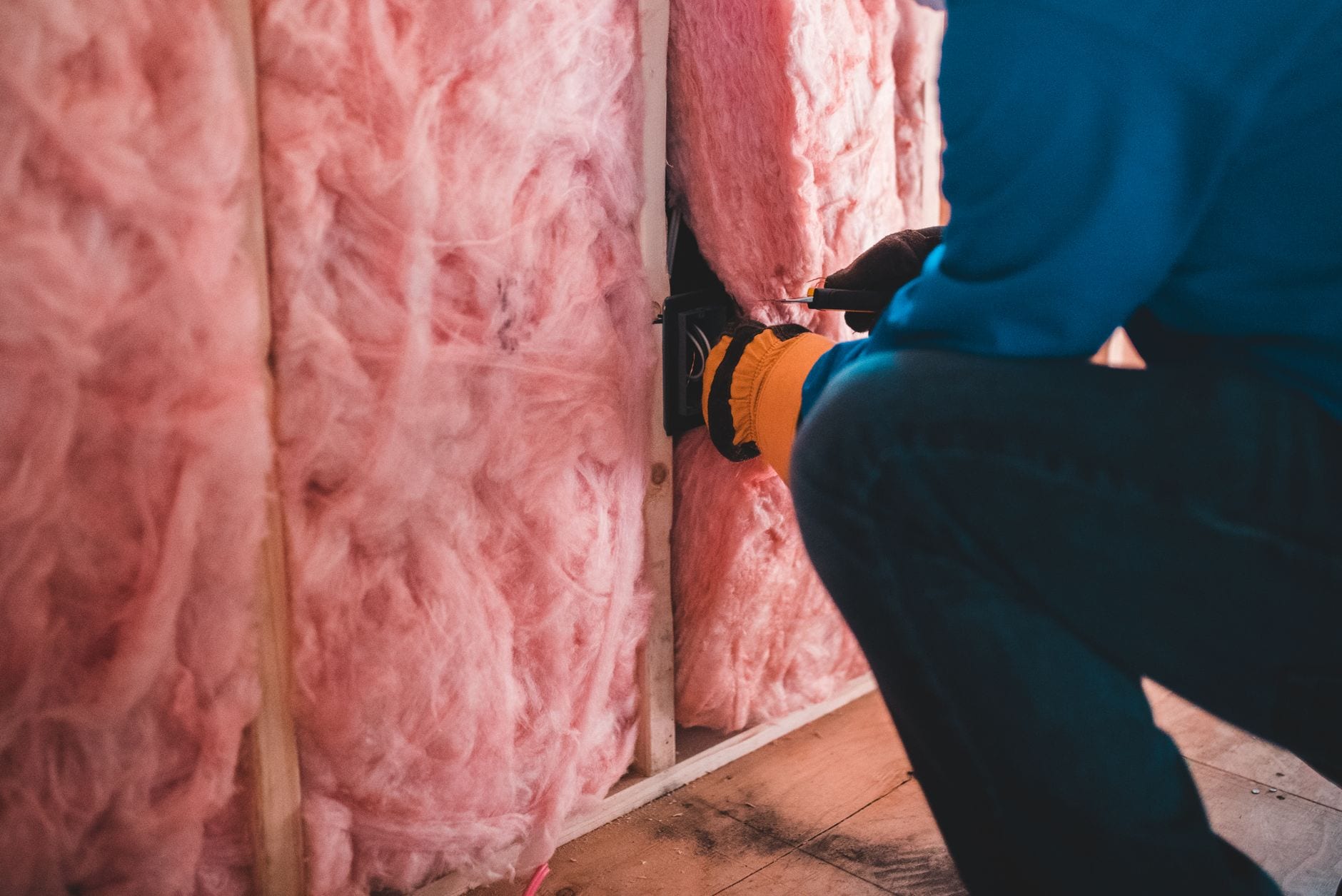
Commercial Insulation Recruiting
Mechanical insulators, building envelope installers, spray foam and fireproofing technicians, and the estimators and PMs who run the jobs. Certifications and safety credentials are the real bottleneck here, not headcount. We build the standing pipeline that keeps your crews and your jobsites staffed.
How do you hire insulation installers and mechanical insulators in 2026?
Hiring insulation talent in 2026 means recruiting across two distinct, BLS-tracked occupations that get lumped together too often: Insulation Workers, Mechanical (pipe, duct, boiler, and tank insulation) and Insulation Workers, Floor, Ceiling, and Wall (building-envelope work, including spray foam and blown/loose-fill).
Mechanical insulation is the smaller but faster-growing and higher-paid of the two, and specialty tracks (asbestos-adjacent abatement work, spray-applied fireproofing, and inspection/QC) draw from separately certified labor pools. Search for this trade skews almost entirely toward pay and certification lookups, not hiring help, which is exactly why a standing, pre-vetted pipeline outperforms posting reactively every time a seat opens. My Trade Talent builds and maintains that pipeline on a flat monthly retainer, continuously sourcing mechanical insulators, building envelope installers, spray foam and fireproofing technicians, estimators, and insulation PMs across 100+ US markets so open seats fill with vetted people, not guesses.
Two BLS occupations, and neither one is about hiring help.
Insulation is not one labor market: the Bureau of Labor Statistics tracks it as two distinct occupations with different skills, different pay, and different growth. Search demand for either one skews almost entirely toward pay and certification, not toward finding a crew, which tells you where this hiring actually happens.
Real numbers, no invented gap-fillers.
"Insulation installer salary" draws roughly 50 searches a month, with pay-rate and spray-foam-specific variants adding to a combined salary cluster of roughly 170 searches a month (SEMrush Keyword Magic Tool). The certification and licensing cluster ("certified insulation installer," "how to become a certified insulation installer," "licensed insulation installer," and related terms) runs slightly higher, around 180 combined monthly searches. Search volume for hiring help itself is close to nonexistent: "how to hire an insulation installer" and "hire insulation installers" both register effectively zero monthly volume in SEMrush. That is the honest picture of this market: candidates and researchers look up pay and how to get certified; almost nobody is searching for a crew, because that hiring happens through contractor networks and referrals, not open search.
The BLS split matters more than most contractors realize. Insulation Workers, Mechanical (SOC 47-2132) insulate pipes, ductwork, boilers, tanks, and heat exchangers: industrial and mechanical-system work, and the smaller, higher-paid, faster-growing of the two occupations. Insulation Workers, Floor, Ceiling, and Wall (SOC 47-2131) cover the building-envelope side: walls, attics, floors, and per O*NET's own occupational data, spray foam and blown/loose-fill application fall under this same code, not a separate one. They draw from different skill pools, work different sites, and grow at different rates. Treating them as one interchangeable "insulation" labor market undercounts how specialized each side actually is.
A handful of specialties sit outside both core codes entirely. Asbestos-adjacent abatement work requires its own state- or EPA-recognized certification track and is tracked separately by BLS under Hazardous Materials Removal Workers. Spray-applied fireproofing and firestopping has no dedicated BLS code at all, so we group it under the nearest match rather than force a number that does not exist, and we say so explicitly below.
Workforce age · BLS 2025
This trade is 3.1 years younger than the American workforce as a whole, not older. The people entering it are not in short supply. The people who supervise it are another 7.4 years further on. That gap is where hiring gets hard: you can find technicians, and you cannot quickly find someone who has been doing it long enough to run a crew.
Promoting from inside takes as long as it takes. If you need someone who can run work now, you are hiring from a pool of people who already have jobs, which is a different job than posting a listing.
Source: U.S. Bureau of Labor Statistics, Current Population Survey, Table 11b (2025 annual averages). See all 20 trades compared →
The 10 most-recruited Insulation roles.
BLS tracks exactly two dedicated insulation occupations. Several of the specialties below are grouped under those two codes, or under an adjacent construction occupation, because no dedicated code exists for the specialty itself; we note that explicitly rather than force a number that is not real.
What Commercial Insulation roles pay nationally.
BLS puts the national median for insulation workers, mechanical at $58,340 a year, $42,470 at the tenth percentile and $100,220 at the ninetieth, across 25,660 people employed. Four of the roles above sit inside one BLS occupation (Building Envelope Insulation Installer, Spray Foam Technician, Fireproofing / Firestop Technician among them), so one figure covers all of them - the gap between the tenth and the ninetieth percentile is where that difference shows up. Metro-level medians for these occupations are on each market page below.
| Roles | National median | 10th-90th percentile | Employed nationally |
|---|---|---|---|
| Mechanical Insulator (Pipe/Duct/Boiler)Insulation Workers, Mechanical (47-2132) | $58,340 | $42,470 - $100,220 | 25,660 |
| Building Envelope Insulation Installer · Spray Foam Technician · Fireproofing / Firestop Technician · Blower / Loose-Fill Insulation TechnicianInsulation Workers, Floor, Ceiling, and Wall (47-2131) | $49,120 | $37,030 - $78,190 | 44,440 |
| Insulation Foreman / Crew LeadFirst-Line Supervisors of Construction Trades and Extraction Workers (47-1011) | $79,920 | $53,280 - $128,260 | 812,210 |
| Insulation EstimatorCost Estimators (13-1051) | $78,740 | $48,530 - $130,820 | 224,220 |
| Insulation Project ManagerConstruction Managers (11-9021) | $114,990 | $69,690 - $189,440 | 380,360 |
| Abatement-Certified InsulatorHazardous Materials Removal Workers (47-4041) | $49,450 | $38,460 - $82,410 | 51,710 |
| Insulation Inspector / QC TechnicianConstruction and Building Inspectors (47-4011) | $74,690 | $47,140 - $114,200 | 146,720 |
BLS Occupational Employment and Wage Statistics, May 2025, national, cross-industry, all ownerships. Where several of the roles above share one BLS occupation the row names them together, because BLS publishes one figure for the occupation rather than one per job title.
Three resources to hire smarter in Insulation.
Each one is built specifically for insulation contractors, not generic recruiting advice. All free. Written by people who do this work every day.
A focused guide on hiring, vetting, and retaining mechanical insulators, building envelope installers, and specialty technicians in a credential-driven labor pool. Role-specific recruiting playbooks and a candid look at what works.
Download Definitive Guide to Insulation Hiring →
Compensation benchmarks for all 10 Insulation positions across 9 U.S. Census Divisions. Built from BLS Occupational Employment Statistics data plus our own placement records.
Download 2026 Insulation Salary Guide →
A simple, practical framework for interviewing insulation candidates. Three structured steps to evaluate technical fit, motivational fit, and culture fit, without wasting your time or theirs.
Download 3-Step Interview Guide for Insulation →What credentials matter, and what kills offers.
Most searches in this trade fail after the offer rather than before it. These are the credentials that actually gate the work, and the things that most often end a hire between the handshake and the first morning. Every credential below links to the body that issues it. What varies by state is the licensing rule, which is set out on each market page.
The credentials that gate the job
- EPA asbestos Model Accreditation Plan accreditationEPA, through EPA-approved or state-approved training providers
The most important gate in commercial insulation, because pipe and boiler lagging in older buildings is thermal system insulation. EPA requires trained and accredited professionals for inspections and response actions in schools and public and commercial buildings, across five disciplines including worker and contractor/supervisor. Refresher training is annual.
- OSHA asbestos construction training, by work classOSHA, 29 CFR 1926.1101
Sets what training a worker needs before each class of asbestos work. Class I covers removal of thermal system insulation and surfacing material, which is exactly what stripping old pipe involves, and its training must match the EPA accreditation curriculum in content, method and duration.
- Heat and Frost Insulators apprenticeshipInternational Association of Heat and Frost Insulators and Allied Workers, through local joint apprenticeship and training committees
The national union pathway and the default credential on signatory commercial and industrial work. Four years, with a stated minimum of 144 classroom hours and 1,600 on-the-job hours a year, including asbestos and lead remediation, OSHA 10 and 30, and firestop.
- Thermal Insulation Inspector CertificationNational Insulation Association (NIA)
The portable quality-control credential for inspecting mechanical insulation against specification, and the step that moves an installer into inspection and QA pay. Requires three years of commercial or industrial experience, prerequisite courses, a two-day course and two proctored exams. Valid three years.
What most often kills an offer
- Medical surveillance can disqualify after the offer
OSHA requires medical surveillance for anyone doing 30 or more days a year of Class I, II or III work or exposed above the limit, and separately, with no day threshold, requires that anyone wearing a negative pressure respirator be found physically able to do the work. A candidate can accept and then be washed out at the physical.
- Respirator fit testing and facial hair
Abatement is negative pressure respirator work. Medical evaluation comes before fit testing, fit testing is required before first use and annually, and tight-fitting respirators may not be worn with facial hair that breaks the seal. Experienced insulators regularly decline rather than shave.
- Asbestos accreditation is state-granted and lapses every year
Accreditation comes from EPA or from a state running an approved plan, and EPA notes that states and municipalities may add their own requirements. With a mandatory annual refresher, a candidate who moves across a state line, or whose refresher lapsed in a slow stretch, cannot be dispatched on day one.
Researched from each issuing body and from federal and state agency sources. Licensing and certification rules change; the links above are the authority, not this page.
Hiring questions for Insulation
How much do insulation installers and mechanical insulators make?
There is no single "insulation" wage figure because BLS tracks two separate occupations. Insulation Workers, Floor, Ceiling, and Wall (the building-envelope side) carry a national median of roughly $49,120 a year (about $23.62/hour). Insulation Workers, Mechanical (pipe, duct, boiler, and tank work) run higher, around $58,340 a year (about $28.05/hour); figures reflect current BLS-sourced wage data via O*NET OnLine. Both move a lot by metro and specialty; mechanical insulation tends to command more because it is more code-driven and industrial in nature.
What is the difference between a mechanical insulator and a building envelope insulation installer?
A mechanical insulator (BLS 47-2132) applies, removes, and repairs insulation on pipes, ductwork, boilers, tanks, and heat exchangers, work that is about controlling noise and temperature on mechanical systems, usually in industrial or commercial mechanical rooms. A building envelope installer (BLS 47-2131) works walls, attics, and floors with batt, roll, rigid, spray foam, and blown or loose-fill materials, work that is about controlling heat and moisture through a structure's shell. They are tracked as separate BLS occupations for a reason: different skill sets, different job sites, and different growth trajectories.
What certifications should I look for when hiring an insulation installer?
For standard batt, blown, or spray foam installation, there is not one universal license the way there is in some trades. OSHA 10/30 safety training is the baseline most commercial GCs expect, and manufacturer-specific spray foam certification matters for that specialty. For abatement-adjacent work, it is different: removing or disturbing asbestos-containing insulation legally requires state- or EPA-recognized asbestos abatement certification, which is a distinct, mandatory credential, not optional paperwork. Ask for documented, verifiable project experience either way; a resume claim is not a certification.
Why is insulation hiring different from other trades?
Search data for this trade is almost entirely pay and certification lookups: people want to know what an installer earns and how to get certified, not "hire an insulation installer," which barely registers any search volume at all. That gap means this hiring runs through contractor networks and referral relationships far more than open job postings, which is exactly why a maintained, pre-vetted pipeline outperforms reactive posting in this trade specifically.
What does an insulation inspector or QC technician actually check?
An inspector verifies that installed R-value matches the spec for that assembly, that vapor barriers and air seals are placed and sealed correctly, and, on commercial jobs, that fire-rated assemblies and firestopping meet code at penetrations and joints. This work maps to the BLS Construction and Building Inspectors occupation (47-4011) rather than to a dedicated "insulation inspector" code, since inspection is inspection regardless of trade.
Should I use a staffing agency or hire directly for insulation roles?
It depends on how consistently you have open seats and how specialized the role is. Generalist contingency agencies rarely maintain a real bench in mechanical insulation, abatement-certified work, or spray foam specifically. A recruiting partner that maintains a standing, vetted pipeline specific to insulation (rather than sourcing reactively per req) tends to fill faster and with better-fit candidates, especially for the harder-to-staff specialties like mechanical and abatement-adjacent work.
Insulation hiring intel, by metro.
Each of these market pages covers current wages by role, real hiring conditions, and what it takes to win the hire in that specific metro.
We publish how long our own searches actually take. Across every trade the median is 21 days over 88 timed searches in 2026 year to date. We have not closed enough Commercial Insulation searches yet to break that out - the Hiring Index shows which trades we have. Figures are calendar days from our first contact with the candidate to the hire.
Every hire from zero is a tax on your team.
Every week a seat sits open, the rest of your crew is covering for it. Every contingency fee you pay is money that didn't go toward growth. There's a better model. Let's build your pipeline.
Schedule a Discovery Call