

CDL Driver & Fleet Recruiting
CDL-A and CDL-B drivers, dispatchers, fleet and terminal managers, DOT safety and compliance staff, and the diesel technicians who keep the trucks on the road. Licensed, insurable drivers are the bottleneck, not job postings. We build the standing pipeline that keeps your fleet staffed instead of leaving you to chase one seat at a time.
How do you hire CDL drivers and fleet staff in 2026?
Hiring CDL drivers and fleet staff in 2026 means recruiting inside a licensing bottleneck, not a job-posting one.
The Bureau of Labor Statistics tracks Heavy and Tractor-Trailer Truck Drivers (CDL-A) and Light Truck Drivers (CDL-B, nearest match) as separate occupations, and search data shows candidates researching how to get a CDL and what it pays far more than employers searching for hiring help. Fleets that win consistently maintain a standing pipeline of licensed, insurable drivers and support staff (dispatchers, fleet and terminal managers, DOT safety and compliance staff, diesel technicians) instead of posting reactively every time a seat opens. My Trade Talent builds and maintains that pipeline on a flat monthly retainer, continuously sourcing CDL-A and CDL-B drivers, dispatchers, fleet managers, and safety/compliance staff across 100+ US markets so open seats fill with licensed, vetted people, not guesses.
Search demand runs through licensing, not hiring help.
The CDL is the whole story in this trade’s search data. People search for what the license costs, how to get one, and what it pays, far more than anyone searches for help hiring drivers. That gap is exactly why fleets that wait on job-board applicants lose out to fleets running a standing pipeline.
The license, not the job, drives the traffic.
“Commercial driver’s license CDL” alone draws roughly 14,800 searches a month, with “CDL commercial driver’s license” adding another 5,400, and the broader licensing cluster (license itself, CDL-B licensing, the test, the cost) runs to roughly 23,900 combined monthly searches (SEMrush Keyword Magic Tool). Pay-related terms are the second-biggest cluster: “CDL driver salary” draws about 2,900 searches a month, with pay-rate and wage variants adding several hundred more: call it roughly 6,800 combined across the salary cluster. Job-seeker terms like “CDL driver jobs” (6,600/mo) and “paid CDL driver training” (480/mo) round out the volume: call that cluster roughly 8,500 combined. None of that is an employer searching for hiring help; there is no meaningful volume in this dataset for anything resembling “hire a truck driver” or “driver staffing agency.”
That is the honest read on this market: the license itself is the bottleneck candidates and researchers are focused on, not the hiring transaction. A CDL is a federal/state credential administered under FMCSA standards, and it comes in classes that determine what a driver is legally permitted to operate: a Class A driver can run a tractor-trailer combination, a Class B driver is limited to a single heavy vehicle (straight trucks, box trucks, some buses) without a large towed unit. Fleets do not compete for drivers on job-board visibility; they compete for a comparatively small, already-licensed pool, which is exactly the kind of market where a maintained, pre-vetted pipeline outperforms posting-and-praying every time a seat opens.
Workforce age · BLS 2025
This trade runs 4.3 years older than the American workforce as a whole, which is unusual among the commercial trades and worth planning around.
Promoting from inside takes as long as it takes. If you need someone who can run work now, you are hiring from a pool of people who already have jobs, which is a different job than posting a listing.
Genuinely aging. More than four years above the national workforce median and among the oldest occupations we staff.
Source: U.S. Bureau of Labor Statistics, Current Population Survey, Table 11b (2025 annual averages). See all 20 trades compared →
The 10 most-recruited Commercial Trucking roles.
These are the positions we maintain active pipelines for in commercial fleet trucking. Several of these roles are grouped under broader BLS occupational codes since the trade does not have a dedicated code for every specialty; we note that explicitly rather than force a number that does not exist.
What CDL Driver & Fleet roles pay nationally.
BLS puts the national median for heavy and tractor-trailer truck drivers at $58,640 a year, $40,140 at the tenth percentile and $79,380 at the ninetieth, across 2,062,040 people employed. Fleet Manager and Terminal Manager sit inside one BLS occupation, so one figure covers all of them - the gap between the tenth and the ninetieth percentile is where that difference shows up. Metro-level medians for these occupations are on each market page below.
| Roles | National median | 10th-90th percentile | Employed nationally |
|---|---|---|---|
| CDL-A Truck DriverHeavy and Tractor-Trailer Truck Drivers (53-3032) | $58,640 | $40,140 - $79,380 | 2,062,040 |
| CDL-B Truck DriverLight Truck Drivers (53-3033) | $44,860 | $30,800 - $80,310 | 983,300 |
| Dispatcher / Fleet CoordinatorDispatchers (43-5032) | $50,340 | $36,030 - $78,140 | 202,810 |
| Fleet Manager · Terminal ManagerTransportation, Storage, and Distribution Managers (11-3071) | $107,230 | $65,120 - $194,900 | 221,180 |
| Safety & Compliance Manager (DOT)Compliance Officers (13-1041) | $80,730 | $48,220 - $133,720 | 417,070 |
| Diesel Mechanic / Fleet TechnicianBus and Truck Mechanics and Diesel Engine Specialists (49-3031) | $61,770 | $44,530 - $88,740 | 289,960 |
| Logistics CoordinatorCargo and Freight Agents (43-5011) | $52,260 | $38,340 - $79,810 | 97,670 |
| Driver RecruiterHuman Resources Specialists (13-1071) | $75,940 | $47,180 - $128,720 | 912,430 |
| Route / Delivery SupervisorFirst-Line Supervisors of Transportation and Material Moving Workers (53-1047) | $62,890 | $43,360 - $96,150 | 623,640 |
BLS Occupational Employment and Wage Statistics, May 2025, national, cross-industry, all ownerships. Where several of the roles above share one BLS occupation the row names them together, because BLS publishes one figure for the occupation rather than one per job title.
Three resources to hire smarter in Commercial Trucking.
Each one is built specifically for commercial fleet operators, not generic recruiting advice. All free. Written by people who do this work every day.
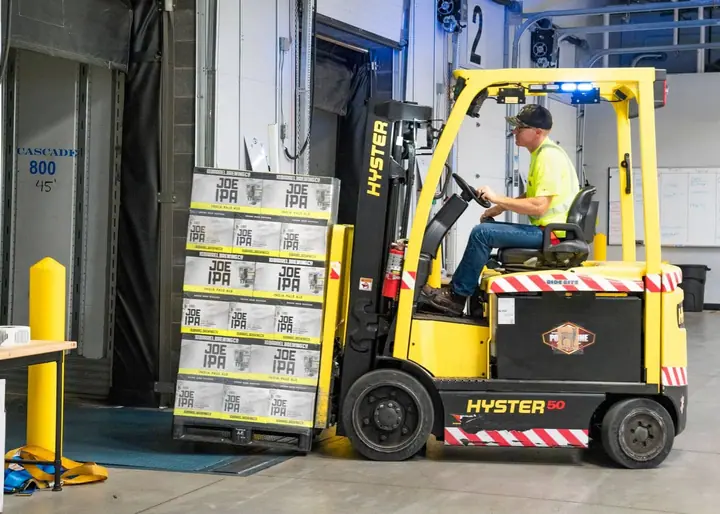
A focused guide on hiring, licensing-verification, and retaining CDL drivers and fleet staff. Role-specific recruiting playbooks and a candid look at what works.
Download Definitive Guide to Commercial Trucking →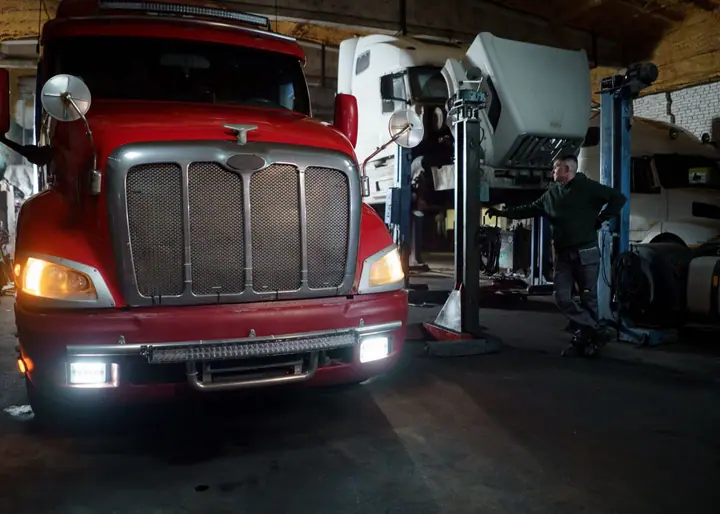
Compensation benchmarks for all 10 Commercial Trucking positions across 9 U.S. Census Divisions. Built from BLS Occupational Employment Statistics data plus our own placement records.
Download 2026 Commercial Trucking Salary Guide →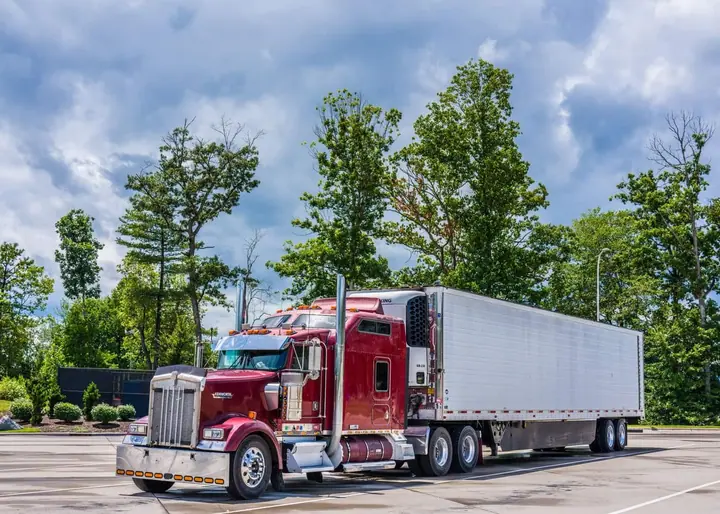
A simple, practical framework for interviewing CDL drivers and fleet-support candidates. Three structured steps to evaluate technical fit, motivational fit, and culture fit, without wasting your time or theirs.
Download 3-Step Interview Guide for Commercial Trucking →What credentials matter, and what kills offers.
Most searches in this trade fail after the offer rather than before it. These are the credentials that actually gate the work, and the things that most often end a hire between the handshake and the first morning. Every credential below links to the body that issues it. What varies by state is the licensing rule, which is set out on each market page.
The credentials that gate the job
- Commercial Driver’s License, Class B and Class AState driver licensing agency, to federal standards set by FMCSA
Class B covers any single vehicle rated at 26,001 pounds or more, which is what gates tandem and tri-axle dump trucks and most straight material trucks. Class A covers combinations above that with a towed unit over 10,000 pounds, which is what flatbed, lowboy and transfer dump work needs.
- Entry-Level Driver Training (ELDT), recorded on the Training Provider RegistryFMCSA, with training delivered by a provider listed on the federal registry
Since 7 February 2022 a first-time Class A or Class B applicant, a Class B holder upgrading to Class A, and a first-time school bus, passenger or hazardous materials endorsement applicant must complete registered theory and behind-the-wheel training before taking the test. Drivers licensed before that date are not affected.
- Medical Examiner’s Certificate, the DOT medical cardA medical examiner on the FMCSA National Registry of Certified Medical Examiners
Certification that the driver is physically qualified, valid for at most 24 months and as little as 12 for insulin-treated diabetes and certain vision deficiencies. Results now pass electronically from the examiner to the state licensing agency.
- A clear FMCSA Drug and Alcohol Clearinghouse queryFMCSA
Before a driver performs any safety-sensitive work the employer must run a pre-employment full query, which needs the driver’s specific consent. The driver cannot start until it returns clear, and employers run at least an annual limited query thereafter.
What most often kills an offer
- A prohibited Clearinghouse status now takes the licence too
Since November 2024 state licensing agencies must remove commercial driving privileges from a driver under a prohibition. An old refusal or positive test can surface only after the candidate has accepted, and it now costs them the CDL rather than just the job.
- The air brake restriction, found after the offer
A driver who failed the air brake knowledge component, or tested in a vehicle without air brakes, carries an L restriction barring them from any air-braked commercial vehicle. Essentially every commercial dump truck has air brakes. Removing it means re-testing in a properly equipped vehicle, which the candidate usually cannot arrange alone.
- Under 21 cannot cross the state line
Federal rules require a driver to be at least 21 to drive in interstate commerce. In a metro whose pits, plants or job sites straddle a state border, a 19-year-old CDL holder who can run intrastate all day cannot take those loads.
- A hazmat endorsement takes about 60 days and can fail on an old conviction
TSA advises applying at least 60 days ahead, and the disqualifying list is broad and partly permanent. Offences including fraud, extortion, arson and drug distribution disqualify within seven years of conviction or five years of release. A driver hired for placarded work can be stopped months in.
Researched from each issuing body and from federal and state agency sources. Licensing and certification rules change; the links above are the authority, not this page.
Hiring questions for Commercial Trucking
How much do CDL truck drivers make?
There is no single "truck driver" wage figure because the Bureau of Labor Statistics tracks these as separate occupations. Heavy and Tractor-Trailer Truck Drivers (the CDL-A occupation) carry a national median of roughly $58,640 a year (about $28.19/hour); Light Truck Drivers (the nearest BLS match for CDL-B work, since there is no dedicated CDL-B occupation code) run lower, around $44,860 a year (about $21.57/hour). Figures reflect current BLS-sourced wage data via O*NET OnLine. Both move a lot by metro, freight type, and route (local, regional, or over-the-road).
What is the difference between a CDL-A and a CDL-B license?
A CDL-A (Class A) qualifies a driver to operate combination vehicles (a tractor pulling a trailer) with a gross combination weight rating over 26,001 lbs, provided the towed unit itself exceeds 10,000 lbs. That is the license behind most long-haul and regional tractor-trailer freight. A CDL-B (Class B) qualifies a driver for a single heavy vehicle over 26,001 lbs GVWR without a large towed unit: straight trucks, box trucks, dump trucks, and some buses. Class A drivers can generally drive most Class B vehicles; the reverse is not true.
Why is it hard to keep a commercial fleet staffed?
The pool of licensed, insurable drivers is smaller than the pool of applicants, and the two are not the same thing: a candidate can hold a CDL and still be unhireable on a fleet’s insurance policy because of a driving record, an inspection history, or a lapsed medical certification. Search data backs this up: people overwhelmingly search for how to get a CDL and what it pays, not for trucking staffing help, which means most of the sourcing work has to happen through a maintained pipeline rather than open job-board postings.
What should a fleet verify before hiring a driver?
At minimum: an active CDL in the correct class for the equipment being run, a clean or acceptable Motor Vehicle Record, current DOT physical/medical certification, and clearance through the FMCSA Drug and Alcohol Clearinghouse. Any gap in those four disqualifies a driver from most commercial insurance policies regardless of how strong the rest of the resume looks.
Should a fleet use a staffing agency or hire drivers and fleet staff directly?
It depends on how consistently seats open and how tightly the roles are tied to compliance. Generalist staffing agencies often do not screen for CDL class, MVR status, or Clearinghouse standing before submitting a candidate, which pushes the verification work back onto the fleet. A recruiting partner that maintains a standing, pre-screened pipeline specific to commercial trucking tends to fill faster and with candidates who are actually insurable on day one.
What should I ask a CDL driver or fleet manager candidate in an interview?
For drivers, ask about specific freight types and routes they have run (local, regional, OTR), how they handle a hard hours-of-service deadline against a late-running load, and to walk through a pre-trip inspection from memory. For dispatchers and fleet managers, ask how they have handled a DOT audit or an out-of-service violation in the past. The real answer should include the specific corrective steps taken, not just "we fixed it."
Commercial Trucking hiring intel, by metro.
Each of these market pages covers current wages by role, real hiring conditions, and what it takes to win the hire in that specific metro.
We closed 2 commercial trucking searches this year.
Not a capability claim - the actual seats, what made each one hard, and how long it took. Here are two, and every one links to its write-up.
- Senior Freight DispatcherA decade of carrier relationships and margin management, placed on a freight desk in three weeks.
- Local CDL Class A DriverScreened, offered, onboarded and driving the same day - two weeks end to end.
6 commercial trucking seats are open right now.
Not a sample of what we could find - these are seats commercial trades contractors are actively trying to fill, and the applications come to us rather than into a job board.
- Class A CDL DriverApply →
- Class A CDL Flatbed / Oversize DriverApply →
- Class A CDL Tri-Axle / Oversize DriverApply →
- Trailer MechanicApply →
- Diesel MechanicApply →
- Diesel Mechanic / Tractor Trailer TechnicianApply →
Every open role we are running →
Board last synced September 28, 2026. Roles move fast; /jobs/ is always the current list.
We have closed 2 CDL Driver & Fleet searches in 2026 year to date - too few to publish a median without overstating what we know. The count, the range and every other trade are in the Hiring Index. Figures are calendar days from our first contact with the candidate to the hire.
Every empty seat is a tax on your fleet.
Every day a truck sits without a licensed driver, the rest of your fleet is covering the gap. Every contingency fee you pay is money that didn't go toward growth. There's a better model. Let's build your pipeline.
Schedule a Discovery Call