
Why Trucking Companies Struggle to Recruit Drivers Year-Round
Driver recruiting never stops because a CDL alone doesn't make someone qualified for your fleet. Endorsements, MVR, insurance, route, home time, equipment and pay all narrow the usable pool.


Short answer: Driver recruiting is continuous because holding a CDL does not automatically make a candidate qualified for a specific fleet. License class, endorsements, MVR, DOT/FMCSA requirements, insurance eligibility, route type, home time, equipment, physical demands and compensation all narrow the usable pool. Employers are not recruiting "a driver." They are recruiting someone who fits a specific operating model.
Key takeaways
- A CDL is the starting line, not the qualification. Class, endorsements and equipment experience have to match your freight.
- Insurance is a second filter. A legally licensed driver can still fall outside your insurer's MVR criteria.
- Lifestyle fit decides a lot of searches. Local, regional and OTR routes attract different people, and home time is part of the job, not a perk.
- Pay has to be comparable. Hourly, mileage, percentage, stop and detention pay can make two "identical" headline numbers very different.
- A warm pipeline beats restarting. Fleets that recruit all year don't start from zero every time a driver leaves.
The real problem is a narrow qualified pool
For a fleet, the applicant count can look healthy and still hide the problem. Plenty of people in a market hold a CDL. Far fewer hold the right class and endorsements, carry an MVR your insurer will accept, have run the equipment you run, and want the route and schedule you're offering. That's why a driver posting can pull dozens of applications and still leave a truck parked.
Each of these constraints removes part of the pool:
- License/endorsements: CDL class and endorsements must match the equipment and freight.
- MVR/insurance: A legally licensed driver can still fail an employer's insurance criteria.
- Route/home time: Local, regional and OTR lifestyles attract different candidates.
- Equipment/freight: Flatbed, tanker, hazmat, dump, delivery and specialized equipment create different experience requirements.
- Pay structure: Hourly, mileage, percentage, stops, detention and bonuses can make two headline pay numbers incomparable.
Stack two or three of those together and the "driver shortage" in your market is really a shortage of drivers who fit your exact operating model.
Why job boards alone struggle
Job boards work when qualified drivers are actively looking. The drivers most fleets want often aren't. They're employed, they get along with their dispatcher, they like their lane or their home time, and they aren't scrolling postings after a shift.
A board reaches the drivers who are already unhappy enough to apply. Reaching the steady ones takes outbound sourcing and a specific reason to talk, such as a better route, more predictable home time or better equipment, before they feel any urgency of their own. If you do post, write the ad around route, home time and pay structure so the right drivers can recognize themselves in it.
Why we see driver searches differently
Commercial trucking is one of the 20 commercial trades My Trade Talent actively recruits, and our 597+ completed placements since 2022 span 240 distinct position titles. That range shows how much a search changes when the variables change. A local dump-truck seat and an OTR tanker seat both say "CDL driver" on the posting, and they recruit nothing alike. We work direct-hire on a flat monthly model, not a percentage-of-salary fee, which fits fleets that hire drivers all year rather than once. More on how we approach it on our commercial trucking recruiting page.
What employers can control
You can't change the size of your market's CDL pool. You can change how many qualified drivers make it through your process.
- Publish the real route and home-time expectations. A clear CDL driver job description screens out the wrong fits before anyone's time is spent.
- State the pay structure, not just an annualized marketing number. Drivers compare how they get paid, not just how much.
- Pre-screen MVR and endorsement requirements before lengthy interviews. If a driver can't clear insurance, find out on the first call.
- Recruit continuously instead of restarting from zero after turnover. Every restart pays the full cost of hiring a CDL driver again.
- Track why qualified drivers decline. If the same reasons keep coming up in equipment, dispatch or schedule, fix those before you spend more on sourcing.
Build a candidate profile that is strict in the right places
The answer is not to drop standards across the board. It's to identify the two or three requirements that actually predict success in your seat and stop treating every preference as mandatory.
If the freight needs a hazmat or tanker endorsement, keep it. If your insurer has a hard MVR line, keep it and screen for it first. If the only gap is a dispatch or routing app a good driver can learn in two weeks, ask whether it's worth shrinking the pool over it. Our commercial trucking interview guide can help you separate the must-haves from the nice-to-haves in the screen itself.
Recruit before the vacancy becomes an emergency
A driver search gets more expensive once the empty seat is already costing you loads. The fix is to recruit while the roster is stable:
- Build a target list of drivers who fit your equipment and freight.
- Know which fleets in your area run the same equipment and hire the same profile.
- Keep previous finalists warm, including drivers who passed on your last offer because of timing.
- Track drivers who weren't ready to move six months ago.
The goal is to make driver recruiting a pipeline discipline rather than a reaction to a resignation. If you want to see what a parked truck is costing while you search, run it through the cost of vacancy calculator.
Bottom line
Year-round driver recruiting works when the employer treats qualification and lifestyle fit as part of the job, not as fine print revealed after the candidate applies. If you want a steady pipeline of drivers who fit your freight, routes and schedule, schedule a discovery call and we'll talk through the drivers your fleet actually needs.
About the author
Michael Carter is President of My Trade Talent. He has been building outbound hiring programs since 2014, and commercial-trades talent pipelines since 2021. His work focuses on helping commercial-trades employers build repeatable direct-hire pipelines for hard-to-reach talent.
Frequently asked questions
Why can't I find qualified CDL drivers when plenty of people have a CDL?
Because the license is only the first filter. Class, endorsements, MVR and insurance eligibility, equipment experience, route type and home time each remove part of the pool. The drivers left are the ones who fit your specific operating model, and that group is much smaller than the number of CDL holders.
Can a licensed CDL driver fail my company's insurance requirements?
Yes. A driver can be legally licensed and still fall outside your insurer's MVR criteria. Pre-screen MVR and endorsements before lengthy interviews so neither side wastes time.
Should a trucking company keep recruiting drivers when it's fully staffed?
Yes. Keeping a target list, warm finalists and drivers who weren't ready to move last time means the next opening starts with names, not a blank posting. Fleets that restart from zero after every resignation pay for the whole search again each time.
How should I show driver pay in a job posting?
State the structure, whether that's hourly, mileage, percentage, stops, detention or bonuses, not just an annualized figure. Two postings with the same headline number can pay very differently. Drivers know that, so a number without the structure behind it is hard to compare and easy to distrust.

More from Talent Talk

What It Costs to Hire a CDL Driver for Your Commercial Fleet in 2026
CDL-A drivers carry a national median around $58,640 and CDL-B around $44,860. The bigger cost driver is not pay - it is that a candidate can hold a valid CDL and still be unhireable on your insurance policy.
Read article →
CDL Driver Job Description [Free Template]
A free CDL driver job description template covering pay structure, license class, and the MVR/DOT/Clearinghouse verification standards this trade runs on.
Read article →
Commercial Landscaping Operations Manager Salary Guide — 2026
There's no responsible single-number salary for a commercial landscaping operations manager. Benchmark the responsibilities, then adjust for scope, market, travel, on-call and management load.
Read article →Who we recruit, and what it produced.
The 2 roles we recruit in this trade
- CDL-A Truck DriverCDL-A
- CDL-B Truck DriverCDL-B
Keep going.
Tools, guides, and side-by-side comparisons that pair with this article.
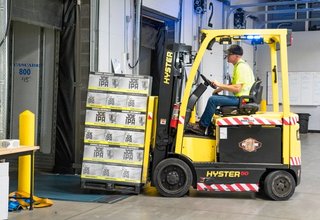
Commercial Trucking - Whitepaper
Industry hiring analysis - labor market, credentials, what works.
Get the download →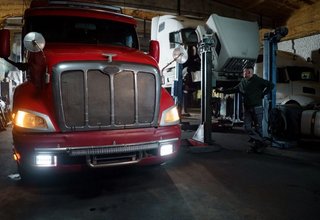
Commercial Trucking - Salary Guide
What this trade's roles actually pay - by region and credential level.
Get the download →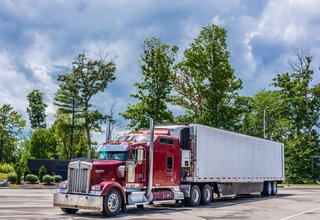
Commercial Trucking - Interview Guide
Role-specific interview questions and a vetting framework.
Get the download →2026 Salary Calculator
Role × experience × region → 2026 base-salary range. Pairs with every article.
Open the calculator → Free toolCost of Vacancy Calculator
Estimate what that open seat has cost you so far. Most decisions look different after this.
Run the math → Decision aidMy Trade Talent vs Contingency Recruiters
An honest side-by-side: cost, time-to-fill, incentive alignment, predictability.
Read the comparison → Decision aidMy Trade Talent vs Staffing Agencies
Direct hire vs temp / contract-to-hire - hourly mark-ups, buyouts, loyalty problem.
Read the comparison → Decision aidMy Trade Talent vs Internal Recruiting
What DIY recruiting really costs once leadership time is priced in.
Read the comparison → Decision aidMy Trade Talent vs Retained Search
Upfront installments and exclusivity vs a flat monthly fee - and when each model actually fits.
Read the comparison → Decision aidMy Trade Talent vs RPO
Program scale, implementation time and cost structure - the hiring volume where RPO starts to make sense.
Read the comparison →