
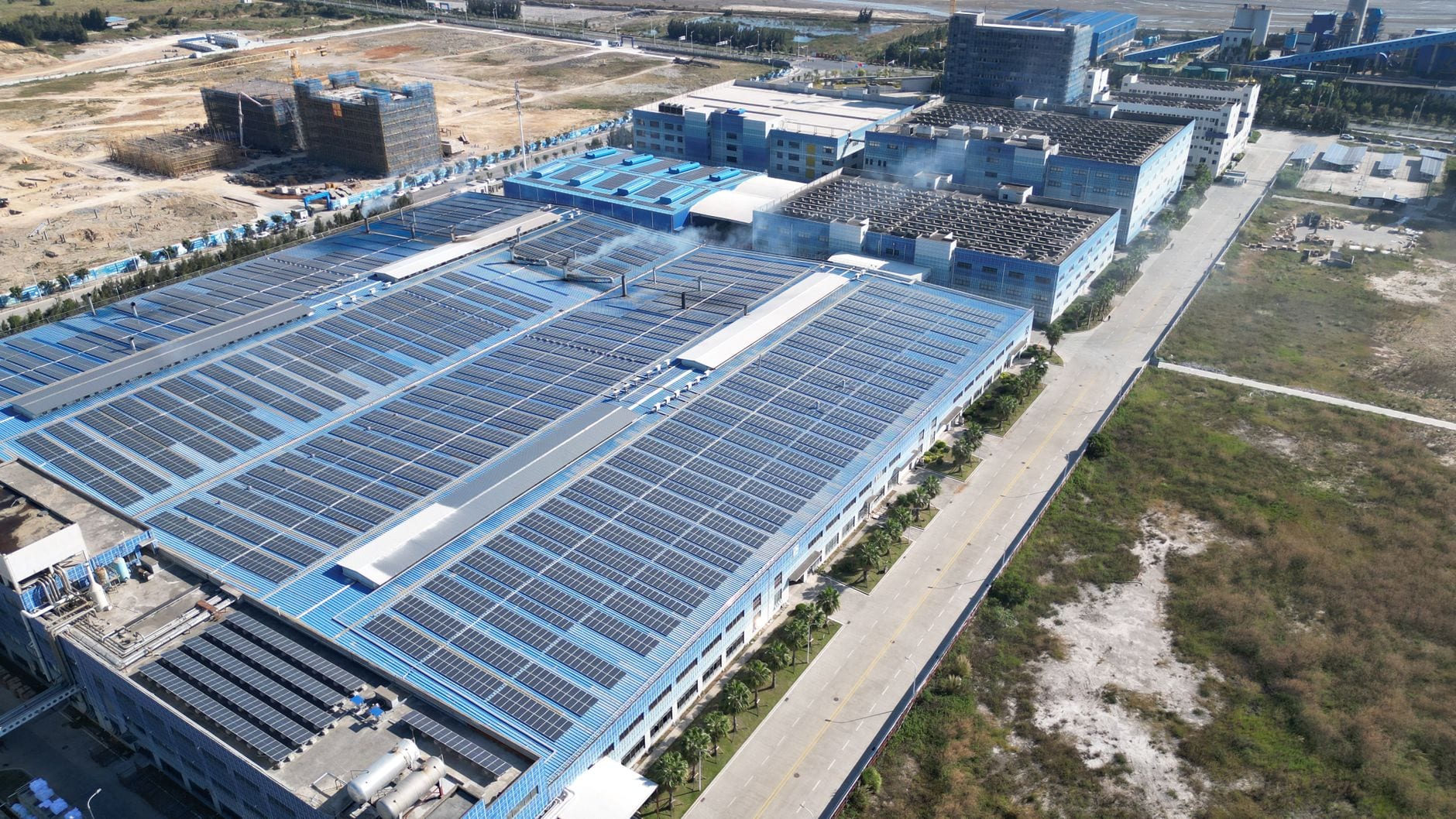
Commercial Solar & LED Recruiting
Solar PV installers, NABCEP-certified technicians, commercial LED retrofit electricians, and the project managers and estimators who run the jobs. This is one of the fastest-growing labor pools in the trades. We build the standing pipeline that keeps pace with the work instead of leaving you to chase one hire at a time.
How do you hire solar installers and LED retrofit electricians in 2026?
Hiring for commercial solar and LED retrofit work in 2026 means competing for talent in one of the fastest-growing occupations the Bureau of Labor Statistics tracks.
Solar Photovoltaic Installers (SOC 47-2231) are projected to grow "much faster than average" (7% or higher) through 2034, and much of that same crew, plus the licensed electricians who handle LED retrofit wiring, is drawn from the broader Electricians occupation (SOC 47-2111), which carries a similar growth rate and roughly 81,000 projected annual openings nationally. NABCEP (North American Board of Certified Energy Practitioners) certification is the credential candidates chase and contractors screen for in solar; its PV Installation Professional certification is widely regarded as the industry's gold-standard credential. Job boards surface resumes, not verified certifications, which is exactly why a standing, pre-vetted pipeline outperforms posting-and-praying every time a seat opens. My Trade Talent builds and maintains that pipeline on a flat monthly retainer, continuously sourcing solar installers, NABCEP-certified technicians, LED retrofit electricians, PMs, and estimators across 100+ US markets so open seats fill with qualified people, not guesses.
A trade growing faster than the search data can track.
Solar installation is one of the fastest-growing occupations the Bureau of Labor Statistics tracks, and the search data shows candidates are chasing pay and certification, not typing "hire a solar installer" into Google. Commercial LED retrofit work rides on the same licensed-electrician labor pool but does not yet show up as its own search category, which is a data gap worth naming honestly.
Pay and certification curiosity is real. Hiring-intent search volume isn't there yet.
"Solar installer salary" draws roughly 590 searches a month, with related pay-rate variants ("solar panel installer salary," "solar installation pay," "solar installer pay," "solar power installer salary") adding up to a combined salary cluster of roughly 1,680 searches a month (SEMrush Keyword Magic Tool). Certification and licensing terms ("solar panel installation certification," "solar installer certification," "certified solar installer," "nabcep solar installer certification," and "solar installation license") add another combined ~900 searches a month. Search volume for hiring help itself is thin by comparison: "hire solar installer workers," "solar installers staffing," and metro-specific hiring queries sum to roughly 90 combined monthly searches.
That gap is consistent with what we see in other specialized trades: candidates and researchers are curious about pay and how to get NABCEP-certified; very few people are searching for staffing help directly, because commercial solar and LED retrofit hiring happens through contractor networks, GC relationships, and specialty staffing partners rather than open job-board search. One honest limitation in this data: the SEMrush pull behind this page is solar-specific: it does not yet surface a separate keyword cluster for commercial LED retrofit hiring or pay. We are flagging that gap rather than inventing LED-specific volume to fill it, and will update this section once that research is done.
The Bureau of Labor Statistics classifies Solar Photovoltaic Installers (SOC 47-2231) as growing "much faster than average" (7% or higher) over 2024–2034, among the strongest growth rates BLS tracks for any construction-trades occupation. Much of the crew doing that work, and doing commercial LED lighting retrofits, is drawn from the same licensed-electrician pool (SOC 47-2111), which is itself projected to grow at the same "much faster than average" rate with roughly 81,000 annual openings nationally.
Workforce age · BLS 2025
BLS does not publish a median age for solar photovoltaic installers. The occupation is too small to meet their publication threshold, which is roughly 50,000 workers nationally.
That suppression is worth knowing in its own right. A labor pool small enough that the federal government will not report on it is a labor pool you will not fill from a job board.
At roughly 22,000 workers nationally, solar PV installers fall below the BLS publication threshold for a median age. Much of the commercial crew is drawn from the licensed electrician pool instead (39.6).
Source: U.S. Bureau of Labor Statistics, Current Population Survey, Table 11b (2025 annual averages). See all 20 trades compared →
The 10 most-recruited LED & Solar roles.
These are the positions we maintain active pipelines for in commercial LED retrofit and solar installation. Several of these roles share a BLS occupational code with a broader specialty, or roll up to a parent code because BLS does not survey wages at that level of detail; we note that explicitly rather than force a number that does not exist.
What Commercial Solar & LED roles pay nationally.
BLS puts the national median for solar photovoltaic installers at $53,140 a year, $41,600 at the tenth percentile and $79,970 at the ninetieth, across 31,350 people employed. Solar PV Installer, NABCEP-Certified Solar Technician, Solar O&M Technician all sit inside one BLS occupation, so one figure covers all of them - the gap between the tenth and the ninetieth percentile is where that difference shows up. Metro-level medians for these occupations are on each market page below.
| Roles | National median | 10th-90th percentile | Employed nationally |
|---|---|---|---|
| Solar PV Installer · NABCEP-Certified Solar Technician · Solar O&M TechnicianSolar Photovoltaic Installers (47-2231) | $53,140 | $41,600 - $79,970 | 31,350 |
| Commercial LED Retrofit Electrician · Solar ElectricianElectricians (47-2111) | $63,190 | $42,640 - $108,510 | 757,220 |
| Solar Project Manager · Electrical Foreman (LED/Solar specialty)First-Line Supervisors of Construction Trades and Extraction Workers (47-1011) | $79,920 | $53,280 - $128,260 | 812,210 |
| Solar Estimator/DesignerCost Estimators (13-1051) | $78,740 | $48,530 - $130,820 | 224,220 |
| Energy Auditor/Efficiency ConsultantConstruction and Building Inspectors (47-4011) | $74,690 | $47,140 - $114,200 | 146,720 |
| Low-Voltage/Controls TechnicianElectrical and Electronics Repairers, Commercial and Industrial Equipment (49-2094) | $74,090 | $46,840 - $105,590 | 65,010 |
BLS Occupational Employment and Wage Statistics, May 2025, national, cross-industry, all ownerships. Where several of the roles above share one BLS occupation the row names them together, because BLS publishes one figure for the occupation rather than one per job title.
Three resources to hire smarter in LED & Solar.
Each one is built specifically for commercial LED retrofit and solar contractors, not generic recruiting advice. All free. Written by people who do this work every day.

A focused guide on hiring, certifying, and retaining solar installers and LED retrofit electricians in one of the fastest-growing labor pools in the trades. Role-specific recruiting playbooks and a candid look at what works.
Download Definitive Guide to LED & Solar →
Compensation benchmarks for all 10 LED & Solar positions across 9 U.S. Census Divisions. Built from BLS Occupational Employment Statistics data plus our own placement records.
Download 2026 LED & Solar Salary Guide →
A simple, practical framework for interviewing solar and LED retrofit candidates. Three structured steps to evaluate technical fit, motivational fit, and culture fit, without wasting your time or theirs.
Download 3-Step Interview Guide for LED & Solar →What credentials matter, and what kills offers.
Most searches in this trade fail after the offer rather than before it. These are the credentials that actually gate the work, and the things that most often end a hire between the handshake and the first morning. Every credential below links to the body that issues it. What varies by state is the licensing rule, which is set out on each market page.
The credentials that gate the job
- NABCEP PV Installation Professional (PVIP)North American Board of Certified Energy Practitioners (NABCEP)
The certification commercial EPCs put on bid qualifications, covering PV design, installation, commissioning and maintenance. It requires documented completed installations in a decision-making role, plus OSHA construction outreach training, so it is not a credential a first-year installer can hold.
- NABCEP PV AssociateNorth American Board of Certified Energy Practitioners (NABCEP)
The entry credential, which NABCEP says qualifies someone to design, sell, install or maintain systems in a supervised capacity. This is the realistic ask for a first-year installer.
- NALMCO Certified Apprentice Lighting Technician (CALT) and Certified Senior Lighting Technician (CSLT)NALMCO, the International Association of Lighting Management Companies
The technician ladder specific to commercial lighting retrofit rather than solar. CSLT covers lighting fundamentals, planned maintenance, luminaires, emergency lighting, energy management and controls, safety and electrical code, and troubleshooting. NALMCO states that CALT must be obtained before earning the CSLT designation. Both renew every three years on nine hours of continuing education.
- OSHA 10-hour and 30-hour Construction Outreach cardsOSHA Outreach Training Program, US Department of Labor
OSHA does not itself require these, but states that some states, cities and employers mandate them as a prerequisite to employment. In practice the card gates site access on most general-contractor-controlled commercial jobs, and NABCEP requires the 10-hour for PVIP.
What most often kills an offer
- NABCEP is not a licence, and candidates think it is
NABCEP says so itself: its board certification is peer recognition, not registration or licensure. A hiring manager who screens on NABCEP alone finds after the offer that the work still has to be performed or supervised under a state electrical or solar contractor licence held by somebody else.
- The electrician licence does not cross the state line
Reciprocity is narrow and level-specific rather than general. Texas publishes journeyman reciprocity with ten named states and master reciprocity with a much shorter list, and states plainly that no other licence types reciprocate. A journeyman relocating from outside those lists starts again.
- PVIP cannot be earned without an employer
It requires documented project credits on permitted, finally inspected systems in a decision-making role, verified and recent. A candidate between jobs, or one whose previous firm will not verify their projects, cannot complete it alone, so the plan to get certified after hire often quietly fails.
- Height is the day-one filter
Commercial rooftop PV triggers fall protection duties above six feet on low-slope roofs, and lighting retrofit means aerial lifts, where only trained and authorised people may operate and a harness or restraint is required. Harness fit, lift certification gaps and plain comfort at height surface on the first morning, not in the interview.
Researched from each issuing body and from federal and state agency sources. Licensing and certification rules change; the links above are the authority, not this page.
Hiring questions for LED & Solar
How much do solar installers and LED retrofit electricians make?
Solar Photovoltaic Installers carry a national median of $53,140 a year (about $25.55/hour), per the latest BLS-sourced wage data via O*NET OnLine. Electricians (who handle most commercial LED retrofit wiring and a large share of solar interconnection work) run higher, at a national median of $63,190 a year (about $30.38/hour). Both figures move a lot by metro and by specialty; we don't have a verified BLS-sourced dollar figure for a NABCEP-certification pay premium specifically, so we're not going to invent one; treat any premium claim you see elsewhere as unverified until proven.
What is NABCEP certification, and why does it matter for hiring?
NABCEP (the North American Board of Certified Energy Practitioners) is a nonprofit certification body founded in 2002 that has become the primary credentialing organization for solar professionals in North America. Its flagship PV Installation Professional certification has been accredited to the ANSI/ISO/IEC 17024 personnel-certification standard since 2007 and is widely regarded as the gold-standard credential for photovoltaic installers. To qualify, a candidate needs documented field experience installing PV systems, a minimum of 58 hours of advanced PV training, and an OSHA-10 construction card or equivalent. It is not a credential someone picks up casually, which is exactly why it is worth verifying directly rather than taking a resume's word for it.
What is the difference between a solar installer and a licensed electrician on a solar crew?
BLS tracks these as two separate occupations. Solar Photovoltaic Installers (47-2231) mount, wire, and commission the PV system itself: panels, racking, conduit, combiner boxes. Electricians (47-2111) are typically the ones who handle the grid interconnection, service-panel work, and any portion of the job that requires a state electrical license to sign off on. Most commercial solar crews need both, and most commercial LED retrofit crews are staffed almost entirely by licensed electricians, since retrofit work is fundamentally an electrical-code job rather than a separate trade.
Is "LED retrofit electrician" a real, separately tracked occupation?
No, and we're not going to pretend otherwise. BLS does not track LED lighting retrofit as its own occupational code; it falls under the general Electricians classification (47-2111). What makes a retrofit electrician a specialist is experience with fixture replacement, driver and ballast compatibility, lighting-controls integration, and utility rebate paperwork, not a separate license or BLS category.
Why is hiring-intent search volume so low for solar and LED roles, if the trade is growing this fast?
Because this is a referral- and network-driven hiring market, not a search-driven one. The SEMrush data behind this page shows real, meaningful search volume for solar pay and certification topics (combined salary and certification search clusters run into the thousands of monthly searches), but combined hiring-intent terms ("hire solar installer workers," "solar installers staffing") sum to only around 90 searches a month. Fast growth in an occupation does not automatically show up as job-board search volume; it shows up in contractor networks, GC relationships, and specialty staffing partnerships instead.
What should I ask a solar installer or LED retrofit electrician in an interview?
For solar candidates, ask them to walk through a specific commercial install from permitting to commissioning, and verify any NABCEP certification directly with NABCEP rather than trusting a resume line. For LED retrofit electricians, ask about fixture and driver compatibility troubleshooting on a real job and their experience navigating utility rebate documentation, since that paperwork trips up crews who have only done new-construction electrical work. For either role, confirm current state electrical licensing status directly if the scope requires it.
LED & Solar hiring intel, by metro.
Each of these market pages covers current wages by role, real hiring conditions, and what it takes to win the hire in that specific metro.
We publish how long our own searches actually take. Across every trade the median is 21 days over 88 timed searches in 2026 year to date. We have not closed enough Commercial Solar & LED searches yet to break that out - the Hiring Index shows which trades we have. Figures are calendar days from our first contact with the candidate to the hire.
Every hire from zero is a tax on your growth.
Every week a seat sits open, the rest of your crew is covering for it, and in a trade growing this fast, the seats keep opening. Every contingency fee you pay is money that didn't go toward the next project. There's a better model. Let's build your pipeline.
Schedule a Discovery Call