Welding & Fabrication hiring kit

How to hire commercial welders.

To hire for welding & fabrication well, My Trade Talent's Welding & Fabrication hiring kit takes the one role we recruit in order: what each seat is and what it pays, the technical questions that test it, the 3 credentials to verify, and what can kill the offer between acceptance and the first day.

1 role: Commercial Welder. Free, with nothing to fill in. If you would rather a recruiter ran the search, that is the Welding & Fabrication recruiting page.

Step 1 · Plan

What each welding & fabrication seat is, and what it pays.

Each band is labelled with where it comes from. A My Trade Talent band is mid-experience, built from our own engagement history, and moves with experience and region. A BLS band is the federal 10th to 90th percentile, national and unadjusted, used where we have not closed enough searches in the trade to publish our own.

Welding & Fabrication roles, pay bands and credentials

My Trade Talent bandEvery bar is drawn on one scale, $40,000 to $85,000.

  • Commercial Welder

    My Trade Talent band

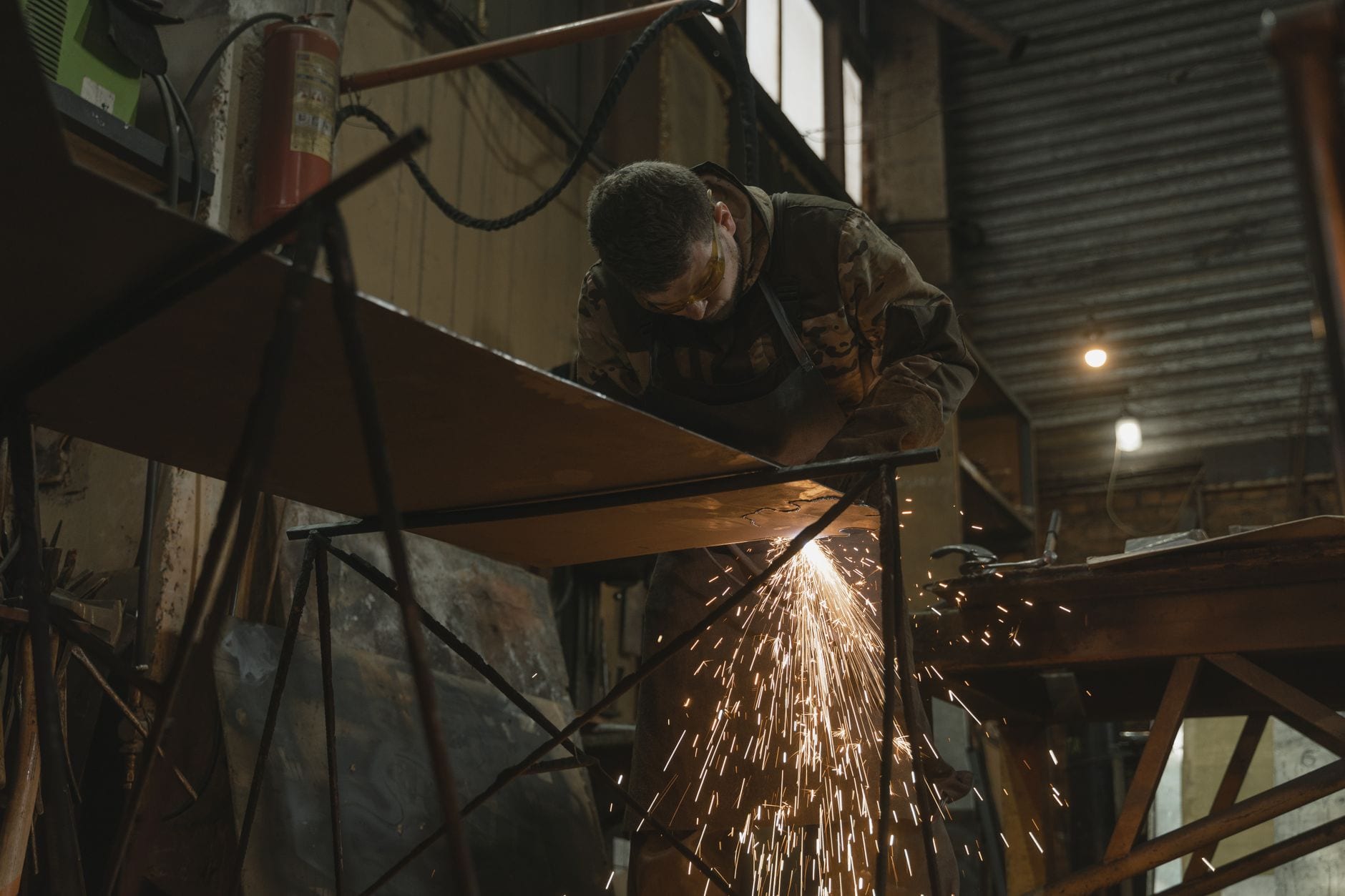
    Welds structural and process work to a procedure: reading the WPS, preparing and fitting joints, running the process the job calls for - stick, MIG, flux-core or TIG - in the positions the work is actually in, and producing welds that pass visual and, where required, radiographic or ultrasonic inspection.

    Pay band $47,000 to $77,000 My Trade Talent mid-experience band, built from our own engagement history. Experience and region move it; the salary calculator applies both.
    Credentials that move an offer AWS Certification

We publish no welding & fabrication median of our own yet, so this is the all-trades figure: My Trade Talent's median commercial trades hire took 21 days across 88 searches closed in 2026 year to date, counted as calendar days from our first contact with the candidate to the hire. The full distribution is in the Hiring Index.

Price the seat by experience and region in the salary calculator, and work out what leaving it open costs in the cost of vacancy calculator.

Step 3 · Interview

How to interview for each welding & fabrication role.

Everyone who applies will claim the experience. These are the questions that test it, the signals that separate a strong candidate from a plausible one, and the mistake each seat invites.

Commercial Welder

My Trade Talent band AWS Certification

Welds structural and process work to a procedure: reading the WPS, preparing and fitting joints, running the process the job calls for - stick, MIG, flux-core or TIG - in the positions the work is actually in, and producing welds that pass visual and, where required, radiographic or ultrasonic inspection.

Questions that find out

  1. Which certifications are current, in which positions, and when were they last renewed?

    A strong answer Answers specifically: the code they are qualified under, the process, the positions, the material thickness and type ranges, and when continuity was last recorded. Knows a qualification lapses if the process has not been used within the period the code allows, and that the paperwork lives with the employer who qualified them. Has the documentation or knows exactly who holds it, rather than saying they have welded everything.

    Follow up with What happens to your qualification if you do not run that process for six months?

  2. What does the WPS tell you about preheat and interpass temperature, and why does it matter?

    A strong answer Knows the procedure sets a minimum preheat by material and thickness and a maximum interpass temperature, and why each exists: preheat slows cooling and reduces hydrogen cracking in thicker or higher-carbon material, and the interpass maximum keeps the heat-affected zone from losing its properties. Measures rather than guesses, with a contact gauge or crayons, at the distance the code specifies from the joint.

    Follow up with Where exactly do you measure preheat relative to the joint?

  3. You have porosity in a flux-core weld outdoors. What are you checking?

    A strong answer Works through the causes: wind blowing the shielding away on a gas-shielded wire, damp or contaminated base metal, mill scale, paint or oil not removed, wire that has been stored badly, wrong gas or flow, too long a stickout, or travel speed and voltage off the procedure. Knows self-shielded wire tolerates wind and gas-shielded does not, and would move to the right consumable or put up a screen rather than keep welding.

    Follow up with At what wind speed does gas-shielded flux core stop working?

  4. How do you set up and check your machine before the first weld of the day?

    A strong answer Checks the settings against the procedure rather than from memory, runs a test piece on scrap of the same material and thickness, and looks at the bead, the penetration and the arc sound before going near the work. Checks the ground connection and its location, the cable condition, the gas flow and the consumable. Says an hour of bad welds because nobody ran a test coupon is the expensive way to find a setting is wrong.

    Follow up with What does your test coupon tell you that the settings alone do not?

  5. How do you set up for an out-of-position weld on structural steel?

    A strong answer Sets up the body and the access first - position, support, clear sight of the puddle, and somewhere to rest - because out-of-position work is mostly control. Adjusts parameters to the position as the procedure allows, often lower heat input and a different technique for vertical up or overhead. Checks the fit-up and cleans the joint. Says they would ask for the work to be repositioned where that is possible rather than welding it badly overhead.

    Follow up with What changes between a flat weld and the same weld overhead?

  6. What do you do when your weld fails visual or UT inspection?

    A strong answer Finds out what the indication actually is before grinding - porosity, slag, lack of fusion, a crack, undercut - because the cause and the repair differ. Repairs to the approved repair procedure rather than welding over it, removing the defect fully and re-inspecting. Looks at what caused it so the next one does not fail. Does not argue with the inspector, and does not quietly cover an indication.

    Follow up with Why does the type of indication change how you repair it?

  7. How do you control distortion on a long run?

    A strong answer Plans the sequence before starting: tacking at intervals, balanced welding on both sides where the joint allows, back-stepping or skip welding rather than one continuous pass, and controlling heat input and the number of passes. Uses fixtures or restraint where appropriate and knows restraint trades distortion for residual stress. Checks for movement as they go rather than at the end when it cannot be fixed.

    Follow up with When does restraint make things worse rather than better?

  8. What is your approach to prep and fit-up before you strike an arc?

    A strong answer Treats it as most of the weld: joint cleaned back to bright metal of mill scale, paint, rust, oil and moisture; bevel angle and root face as drawn; root gap within tolerance; alignment checked; and tacks placed so they can be consumed or are ground back. Says that a bad fit-up cannot be welded out, and that most defects they have seen started before the arc did.

    Follow up with What do you do when the fit-up handed to you is wrong?

  9. How do you read a weld symbol and what does it tell you about prep?

    A strong answer Reads which side of the joint the weld is on from the line, the weld type and size, the groove angle and root opening, length and pitch for intermittent welds, and the tail for the procedure or process. Knows a field weld flag and an all-round symbol when they see one. Can say what the symbol requires them to do to the material before welding, which is the point of reading it.

    Follow up with What does the symbol tell you to do before you weld, not just after?

  10. How do you store and handle your consumables, and why does it matter?

    A strong answer Knows low-hydrogen electrodes come out of a sealed container into a holding oven and have a limited exposure time before they have to be reconditioned or scrapped, because they pick up moisture and moisture means hydrogen cracking. Keeps wire covered and dry and off the floor, and does not use rusty or contaminated wire. Checks batch and classification against the procedure rather than using whatever is on the rack.

    Follow up with How long can a low-hydrogen rod be out of the oven on your jobs?

  11. How do you handle welding on coated or painted material?

    A strong answer Removes the coating back far enough from the joint on both sides rather than welding through it, because the weld will have porosity and inclusions and the fumes may be hazardous. Finds out what the coating is - galvanising, a primer, lead-bearing paint - because that decides the ventilation and the respiratory protection. Says they would stop rather than weld galvanised in a confined space without extraction.

    Follow up with What do you do differently welding galvanised material?

  12. What is your process when a procedure calls for a consumable you do not have?

    A strong answer Does not substitute. Knows the procedure is qualified with that filler and that an equivalent is a decision for the engineer, not the welder. Stops, tells the supervisor and gets the right consumable or a written change to the procedure. Says they have been pushed on this and held, and that an unapproved substitution found at inspection means the weld comes out.

    Follow up with Who can authorise a change of consumable?

  13. How do you manage fit-up gaps that are outside tolerance?

    A strong answer Does not fill it with weld. Knows the procedure sets a maximum root opening and what is permitted beyond it - usually build-up by an approved method, or re-fitting - and that the decision belongs to the engineer. Reports it with the measurement rather than making it work. Says that excessive gap filled with weld metal is one of the most common causes of cracking and rework on structural jobs.

    Follow up with What is the usual remedy when a root gap is too wide?

  14. What is your approach to welding overhead or in a confined space?

    A strong answer Deals with the safety before the welding: ventilation and extraction, atmospheric testing and a permit for a confined space, an attendant, protection from falling slag and spatter, and fire watch for anything below. Checks the escape route and that the cables and gas lines do not block it. Knows fume in a confined space is the hazard people underestimate, and says what would make them refuse to go in.

    Follow up with What would make you refuse to enter and weld?

  15. How do you handle a repair weld on a crack?

    A strong answer Finds the extent of the crack before welding - usually by dye penetrant or magnetic particle - and drills or excavates past both ends rather than welding over it, because a crack welded at the tip just keeps growing. Follows the approved repair procedure including preheat, and re-inspects after. Asks why it cracked, because a crack is usually a design, restraint or procedure problem rather than a bad bead.

    Follow up with Why do you go past the ends of a crack before welding it?

  16. What documentation follows your welds?

    A strong answer Knows what the job requires: which procedure each weld was made to, their own welder identification marked or logged against the weld, the material and heat numbers where traceability applies, inspection records and any repairs. Marks their welds where the code requires it. Says the record is how a weld is traced years later and that on a structural job an untraceable weld can mean the connection comes apart.

    Follow up with How is a weld traced back to you two years later?

What a strong candidate shows

  • States current certifications by process, position and material, with the dates
  • Can read a WPS and say what in it constrains the work
  • Fit-up described as part of the job rather than someone else's step

The mistake

The mistake this seat invites. Accepting "certified welder" without the process, position and expiry. Certifications are specific and they lapse, and the weld test will find out before the job does.
Every role in every trade is in the interview question bank.

Step 4 · Offer

What can kill a welding & fabrication offer before day one.

The things that end an accepted offer between the yes and the start date, specific to this trade and each sourced.

  • A certification that went inactive because nobody filed a form

    This is the quiet one. An AWS Certified Welder credential does not expire on a date, it goes inactive when the six-monthly maintenance documentation stops being submitted, and the route back is requalifying by test rather than catching up on paperwork. A welder who changed employers, or who spent a year on a process other than the one they were certified for, can be inactive without thinking of themselves as uncertified. Check the status, not the certificate.

    Source: www.aws.org/certification-and-education/professional-certification/certified-welder-program/
  • Hiring a qualified welder and assuming they are qualified for your work

    Qualification attaches to a procedure and to the employer who ran the test, which is why "many welders must qualify at nearly every job they travel to". AWS puts the responsibility plainly with the employer, so a hire arriving from a shop that qualified them to its own procedures gives you a person very likely to pass your test, not a person already qualified to your WPS. Budget the test and the paperwork into the first week rather than the first job.

    Source: www.aws.org/magazines-and-media/welding-digest/welding-digest-welder-performance-qualification-and-welder-certification/
  • The CWI who has been out of the work too long to renew

    Renewal at years three and six asks the inspector to confirm no break in practice or employment exceeding two years within the prior three. Someone who left inspection for a spell, or who was out of work, can reach a renewal point unable to make that statement even though the nine years have not run out. Bringing an experienced inspector back into the seat does not by itself put the credential back, so ask where they are in the cycle before the offer depends on it.

    Source: www.aws.org/certification-and-education/professional-certification/cwi-renewal/

Add up the whole offer, not just the base, in the offer calculator.

Step 5 · Onboard

Credentials to verify before the first day.

Each names the body that issues it and links to the issuer's own page or a .gov page. Researched 2026-09-23; re-read the source before relying on an entry.

  • AWS Certified Welder

    American Welding Society

    The portable one, and the only credential here that belongs to the welder rather than to a job. It is kept alive administratively rather than by an expiry date: the holder must "submit certification maintenance documentation every six months confirming that you continue to perform the welding process for which you were certified". AWS is explicit about the consequence - "failure to maintain continuity may result in the certification becoming inactive, requiring you to requalify through testing". Filed on time, it can stay active indefinitely.

    Source: www.aws.org/certification-and-education/professional-certification/certified-welder-program/
  • Welder performance qualification to a code: AWS D1.1, ASME Section IX, API 1104

    The employer, to the code the work is built to

    The distinction that causes the most confusion on a resume. AWS defines qualification as "the demonstration of an individual's ability to produce a weld meeting prescribed standards" and certification as "written verification that a welder has produced welds meeting a prescribed standard". Crucially, "the responsibility for the qualification of welding personnel and procedures lies with the employer", and in practice "many welders must qualify at nearly every job they travel to". Qualification is something you do to a welder, for a procedure, on your paperwork.

    Source: www.aws.org/magazines-and-media/welding-digest/welding-digest-welder-performance-qualification-and-welder-certification/
  • AWS Certified Welding Inspector (CWI)

    American Welding Society

    The quality-control credential, on a nine-year cycle with checkpoints inside it: "the CWI certification is valid for nine years and requires the submissions of a renewal application at years three and six after the initial activation date". Each renewal requires confirming no breaks in practice or employment exceeding two years within the prior three. At nine years, recertification is by the Part B practical exam, 80 professional development hours, achieving the Certified Radiographic Interpreter credential, or adding an endorsement.

    Source: www.aws.org/certification-and-education/professional-certification/cwi-renewal/

State licensing for 39 states (Alabama, Arkansas, Arizona, California, Colorado, Connecticut, District of Columbia, Florida, Georgia, Hawaii, Iowa, Idaho, Illinois, Indiana, Kansas, Kentucky, Louisiana, Massachusetts, Maryland, Michigan, Minnesota, Missouri, North Carolina, Nebraska, New Mexico, Nevada, New York, Ohio, Oklahoma, Oregon, Pennsylvania, Rhode Island, South Carolina, Tennessee, Texas, Utah, Virginia, Washington and Wisconsin) is in the credential check, each with the agency and its source. Open the credential check for Welding & Fabrication.

Step 6 · Retain

Where each role goes next.

Candidates ask about the next step in the first conversation, and an employer who can answer it keeps the people who had other options. Say it on day one, too.

  • Commercial Welder

    Welders move to fitter-welder, lead and foreman, and some add CWI inspection credentials.

Questions

Hiring for welding & fabrication: questions.

What interview questions should I ask when hiring for welding & fabrication?

My Trade Talent's Welding & Fabrication hiring kit carries 16 technical questions for each of its 1 role. For the Commercial Welder, the first is: "Which certifications are current, in which positions, and when were they last renewed?" The full set, with the signals that separate a strong answer, is on this page and in the interview question bank.

What credentials should I verify when hiring in welding & fabrication?

The Welding & Fabrication kit lists 3, each with its issuing body and a primary source: AWS Certified Welder, Welder performance qualification to a code: AWS D1.1, ASME Section IX, API 1104 and AWS Certified Welding Inspector (CWI).

What can kill a welding & fabrication job offer before the start date?

The Welding & Fabrication kit names 3, each sourced: A certification that went inactive because nobody filed a form, Hiring a qualified welder and assuming they are qualified for your work and The CWI who has been out of the work too long to renew.

What do welding & fabrication roles pay?

Commercial Welder: $47,000 to $77,000 (My Trade Talent band). My Trade Talent bands are mid-experience and move with experience and region; BLS figures are national and unadjusted.

How long does it take to hire in welding & fabrication?

We publish no welding & fabrication median of our own yet, so this is the all-trades figure: My Trade Talent's median commercial trades hire took 21 days across 88 searches closed in 2026 year to date, counted as calendar days from our first contact with the candidate to the hire.

Trade Talk A monthly hiring brief for commercial trades employers

What changed in your trade this month, and what to do about it.

One email a month, and only one. We write a separate issue for every trade we recruit in, so you get yours - not a round-up with your trade buried in paragraph nine. Every issue is written for the person actually doing the hiring.

  • Where wages moved in your trade, by market, and what that does to your next offer
  • How long roles like yours are taking to fill, and where it is getting worse
  • Interview and screening tactics that are landing candidates this month
  • What contractors competing for the same people are doing differently

Built on federal wage data, our own closed searches, and what we hear on the desk every week. Written for employers, not candidates. No pitch, no filler, one click to leave.

Pick your trade. That is the one issue you get, once a month.

One email a month. Your trade and your address, nothing else - we do not sell either, and you can unsubscribe from the bottom of any issue. Read this month's issue for your trade first →