Step 3 · Interview How to interview for each HVAC & mechanical role.
Everyone who applies will claim the experience. These are the questions that test it, the signals that separate a strong candidate from a plausible one, and the mistake each seat invites.
HVAC Service Technician
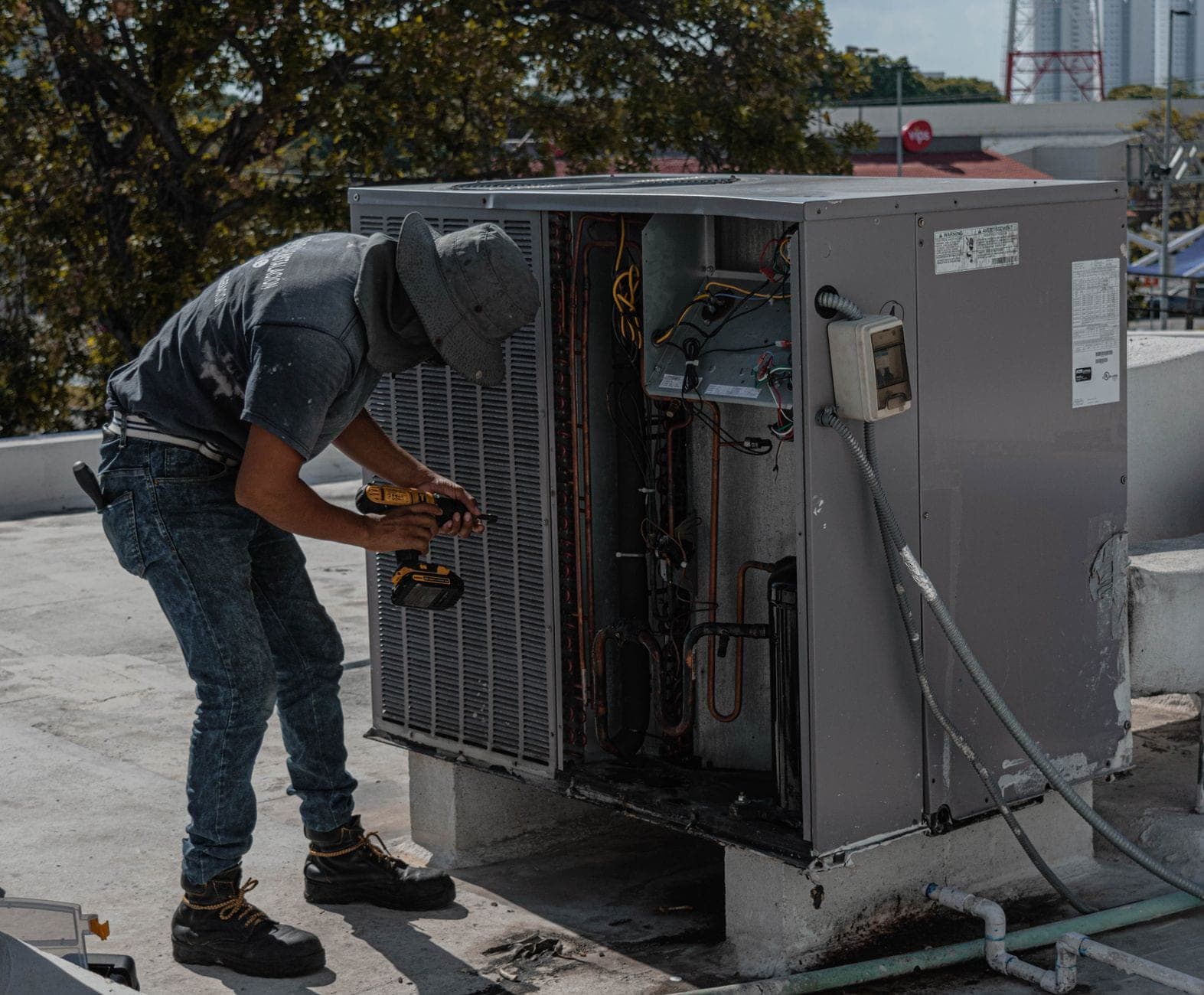
My Trade Talent band Diagnoses and repairs commercial rooftop units, split systems, chillers and the controls wrapped around them, usually alone and usually on someone else's schedule. The work is roughly half diagnosis and half customer handling, because the technician is the only person from the contractor the building ever sees.
Questions that find out
- Walk me through diagnosing a rooftop unit that cools fine in the morning and short-cycles by two in the afternoon.
- What superheat would you expect on a properly charged R-410A system, and what does it tell you when it reads high?
- A tenant says it is too warm and the space is at setpoint. What do you check and in what order?
What a strong candidate shows
- Talks in symptoms and causes rather than part numbers - superheat and subcooling readings, not "I replaced the TXV"
- Has worked unaccompanied on rooftop equipment, not just assisted on installs
- Can describe a call they diagnosed wrong and what the second visit found
The mistake this seat invites. Hiring on EPA 608 and years of experience without testing diagnostic reasoning. The certification is a floor, not a signal, and residential-heavy experience transfers badly to rooftop and chiller work.
HVAC Install Technician (Commercial)
My Trade Talent band Sets and connects commercial equipment on new construction and replacement jobs: rooftop units, split systems, VRF branch controllers, ductwork and refrigerant piping. The job is production work against a schedule, with the quality of the brazing and the hangers determining whether the service department inherits a problem.
Questions that find out
- How do you purge a line set, and what happens downstream if you skip it?
- What do you check on a roof curb before the unit lands?
- Describe the last VRF system you installed - whose, how many indoor units, and who commissioned it?
What a strong candidate shows
- Brazing with nitrogen purge described as routine rather than as a best practice they have heard of
- Has set equipment by crane and can talk about rigging and roof curb fit
- VRF experience named by manufacturer, because the commissioning differs
The mistake this seat invites. Treating install and service as interchangeable. A strong install technician may be a slow diagnostician, and a strong service technician may be uneconomic on a production install crew.
HVAC Controls Technician (BAS / Niagara)
My Trade Talent band Programs, commissions and troubleshoots building automation systems - the layer that decides what the mechanical equipment actually does. Work runs from pulling and terminating controls wiring through graphics, scheduling, trend logs and sequence-of-operations testing against the engineer's intent.
Questions that find out
- Give me a sequence of operations you found wrong during commissioning, and what you changed.
- How do you troubleshoot a BACnet MS/TP trunk where one device drops intermittently?
- When would you use a Niagara JACE rather than putting everything on the supervisor?
What a strong candidate shows
- Platform experience named specifically: Niagara, Metasys, Desigo, Distech, Delta. The platforms are not interchangeable
- Can read a sequence of operations and say where it will fail in practice
- Has integrated across protocols - BACnet MS/TP, IP, Modbus - rather than staying inside one vendor
The mistake this seat invites. Screening this seat as an HVAC role. The scarce skill is integration and programming, and the strongest candidates often come from controls contractors or systems integrators rather than mechanical ones.
HVAC Service Manager
My Trade Talent band Runs the service department: dispatch, technician utilisation, call-back rate, maintenance agreement renewals and the margin on each. The job is a mix of operations and account management, and it owns the number most mechanical contractors actually live on.
Questions that find out
- What was your technician utilisation, and what did you do that moved it?
- How do you decide which maintenance agreements to let go at renewal?
- A technician has a second call-back on the same unit. What happens next in your department?
What a strong candidate shows
- Talks about utilisation, call-back rate and agreement renewal rate as numbers they owned
- Has grown a maintenance agreement base, not just serviced one
- Came up through the field - departments rarely accept a manager who cannot read a work order
The mistake this seat invites. Promoting the best technician into the seat. Field strength does not predict dispatch discipline, and the department loses its best diagnostician in the process.
HVAC Project Manager (Commercial)
My Trade Talent band Owns commercial mechanical projects from buyout through closeout: submittals, procurement with long-lead equipment, subcontractor coordination, change orders, schedule and the job's gross margin. On design-build work the role also carries the engineering relationship.
Questions that find out
- Your chiller slipped twelve weeks. Walk me through what you do first.
- How do you price and present a change order the general contractor will not want?
- At buyout, what do you check before you accept the estimate as your budget?
What a strong candidate shows
- Can state the margin they carried and what moved it, not just project values
- Long-lead equipment procurement described as a scheduling problem they planned around
- Change-order discipline - documentation habits described without prompting
The mistake this seat invites. Hiring on project size alone. A manager who ran one $20M job may have run one schedule; a manager who ran twelve $2M jobs has run twelve buyouts and twelve closeouts.
Every role in every trade is in the interview question bank.