
3-Step Interview Guide for Commercial Pest Control
A practical framework for interviewing commercial pest control candidates. Three structured steps to evaluate license and technical fit, motivational fit, and culture fit - without wasting your time or theirs.
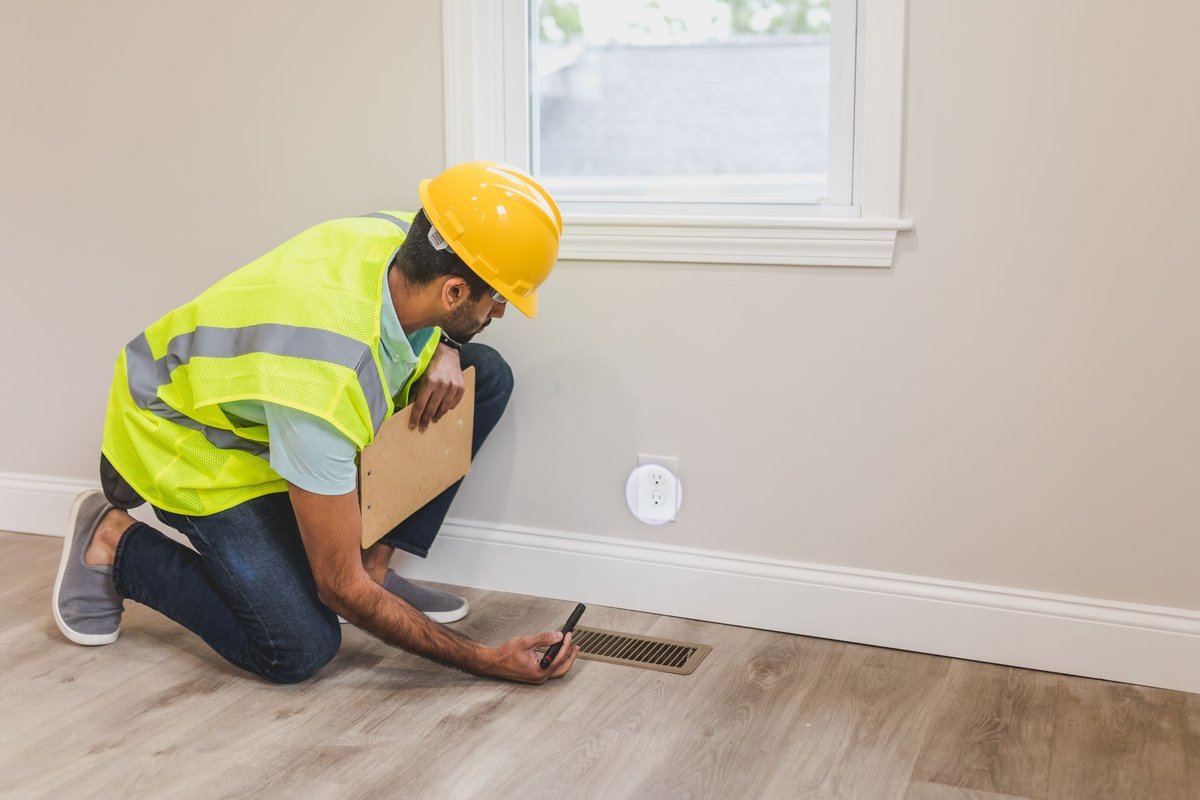
What's inside
- License-verification questions that separate a real licensed applicator from a resume claim
- Role-specific questions for technicians, applicators, inspectors, and branch leadership
- Motivational-fit and culture-fit questions with what to listen for
- A red-flags checklist for the interview room
Get the interview guide.
Fill out the form below for instant access to download the PDF. No spam, we won't share your info.
Thanks - your Commercial Pest Control interview guide is downloading.
Your download should start automatically. If it doesn't, use the download button below.
Download 3-Step Interview Guide for Commercial Pest ControlWho you are actually interviewing.
The questions in the guide come out of our own screens. The facts below are public, and they are the reason the questions are shaped the way they are.
How old the trade really is.
Pest control workers run to a median age of 39.4 against 42.1 for the American workforce as a whole - 2.7 years younger. The layer they get promoted into, first-line supervisors of mechanics, installers and repairers, sits at 47.6. That gap is the thing that is actually scarce: not bodies, but the years it takes to make a foreman.
How wide "market rate" really is.
One in ten pest control workers earns under $34,680 a year and one in ten earns over $61,890, around a median of $45,250. The top of that band is 1.8 times the bottom, for the same federal job title. An interview is what tells you which end of it the person in front of you belongs at - and a bad one is how employers end up paying the top of the band for the bottom of it.
The credential question, state by state.
We have confirmed a state-level licensing requirement touching commercial pest control in 39 states, each one from an official agency source. Three of them, as examples: AL — A structural pest control business needs an annual Structural Professional Services permit covering categories such as household/industrial pest control, fumigation and wood-destroying organism control, with a certified operator (who holds a Commercial Applicator credential) responsible for each office. Certified operators need at least one year of structural pest control experience or equivalent education, and one person cannot supervise more than one main or branch office.; AR — Pest control companies need a commercial license and must employ a licensed operator certified in the relevant classification (1: termites and other structural pests, 2: household pests and rodents, 3: general fumigation), and technicians working under supervision register yearly as agents. Operators must pass the EPA Basic Core exam and a classification exam, and licenses renew every year by July 1.; AZ — A pest management business needs a Business License and a Qualifying Party who holds a Qualified Applicator license, which requires 24 months as a certified applicator or equivalent experience or education. Technicians need a Certified Applicator license, which means passing the Core exam and at least one category exam with 75% or better, and working for a licensed business.. Rules change; every entry on our state pages carries the agency and the source it came from, last checked 2026-09-22.
Sources: U.S. Bureau of Labor Statistics, Current Population Survey, Table 11b (2025 annual averages); Bureau of Labor Statistics, Occupational Employment and Wage Statistics, May 2025.

